


Palm oil and agricultural processing
Steam or thermal oil for sterilization, drying, refining, tanks and process heating. Fibre, shell and other residues require fuel analysis before biomass combustion is selected.
Southeast Asia project support
JIELI matches each system to process duty, local fuel, humidity, water quality, emissions, automation and shipment constraints. For Indonesia, Vietnam, Thailand, Malaysia, the Philippines, Cambodia and Myanmar, the selection starts with the actual plant and fuel—not a standard configuration for the whole region.
Application and fuel selection
Compare the thermal oil heater range for indirect heating and the industrial steam boiler range for steam-consuming processes. Fuel moisture, ash, feed consistency and water quality determine the auxiliaries; country-language guides below help prepare the project inputs.
Steam or thermal oil for sterilization, drying, refining, tanks and process heating. Fibre, shell and other residues require fuel analysis before biomass combustion is selected.
Stable indirect heat for dryers, hot presses and lamination. Heat duty, outlet temperature, flow and biomass moisture shape the heater and circulation system.
Steam demand must include process users, peak loads, pressure, make-up water and condensate return—not only a nominal t/h figure.
Thermal oil supports indirect high-temperature heating for jackets, exchangers, tanks and mixers without a phase change at the process user.
Indonesia: thermal oil heater & boiler uap · Việt Nam: lò dầu tải nhiệt & nồi hơi · Thailand: ฮีตเตอร์น้ำมันร้อน & หม้อไอน้ำ · Malaysia & Penang thermal oil heater selection guide
Project data before model selection
The same nominal capacity can need different combustion, heating surface, auxiliaries and controls when fuel, climate or process conditions change.
Thermal duty in kW, MW or kcal/h; or steam demand in kg/h or t/h, including peak, normal and minimum load.
Thermal-oil supply/return temperatures and process flow, or steam pressure and required steam condition at the user.
Gas pressure and composition, liquid-fuel specification, or biomass moisture, size, ash, calorific value and seasonal variation.
Project city, ambient temperature, humidity, elevation, electrical supply, water quality and available boiler-room space.
Applicable particulate, NOx and SOx limits plus documentation, inspection and registration responsibilities must be confirmed locally.
Boiler only or complete plant, degree of factory assembly, module sizes, port route, lifting plan and on-site commissioning support.
Why Southeast Asia needs country-level configuration
Biomass projects must start with representative fuel data. High moisture, low bulk density, ash behaviour and inconsistent particle size can change feeding, grate selection, furnace volume, air staging and dust collection. Steam projects must also account for make-up water, deaeration, blowdown and condensate return. JIELI defines these interfaces before freezing the pressure parts and auxiliaries; the owner remains responsible for confirming local codes and statutory approval with the competent authority.
Indonesia reference: review the Surabaya YLW250, 2800 kW biomass thermal oil heater workshop dossier (PDF, English / Spanish). This documents equipment assembly for the project, not independently measured site performance. Start with the Indonesia guide or compare gas-fired steam boilers and biomass steam boilers if your process needs steam rather than indirect oil heating.
Projects in Southeast Asia
These images document JIELI project equipment and export preparation. Each new plant still receives its own process and fuel review.
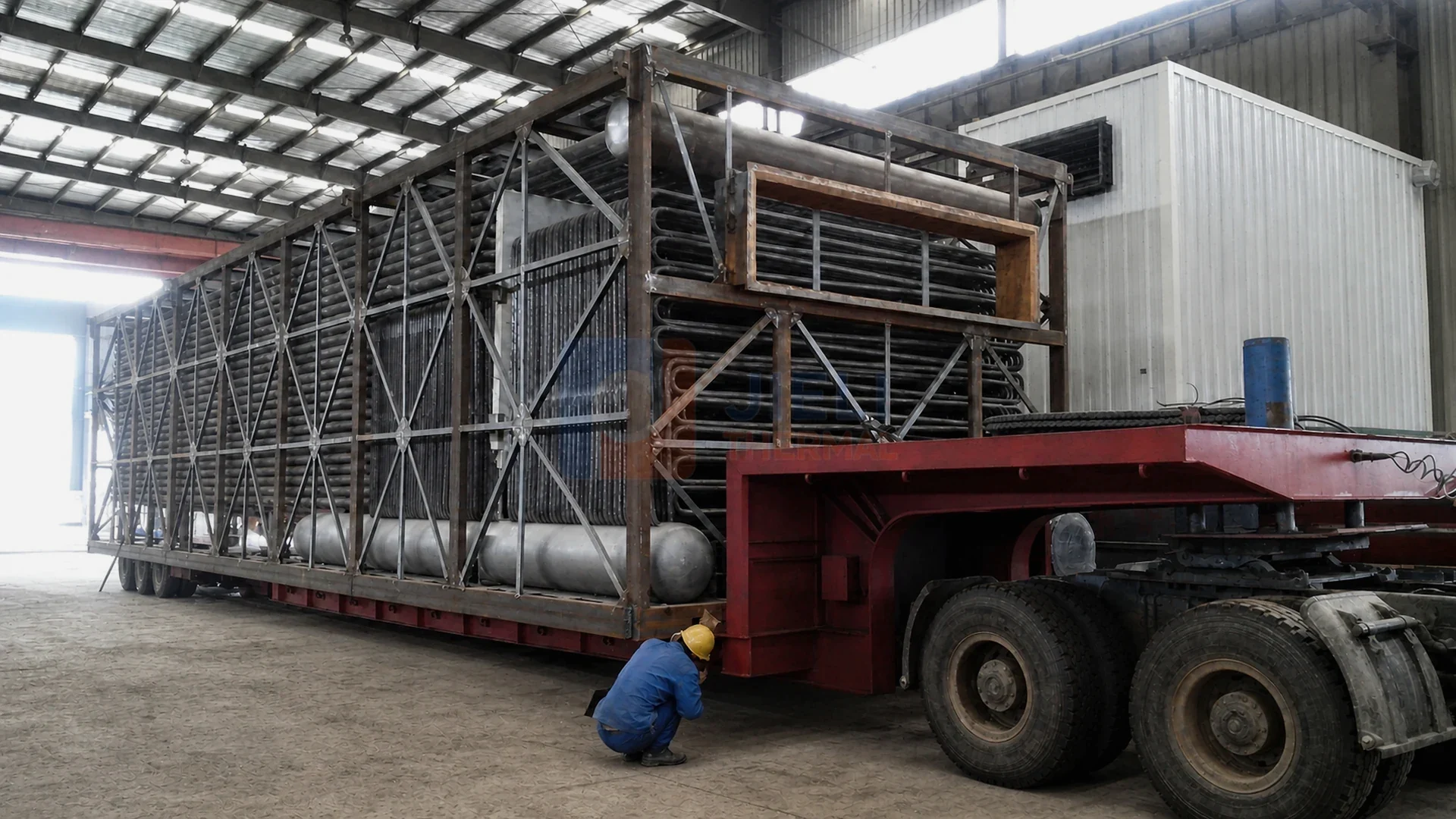
Large solid-fuel process-heating equipment prepared for export, illustrating the module and shipping constraints of higher-capacity systems.
Open Indonesia page →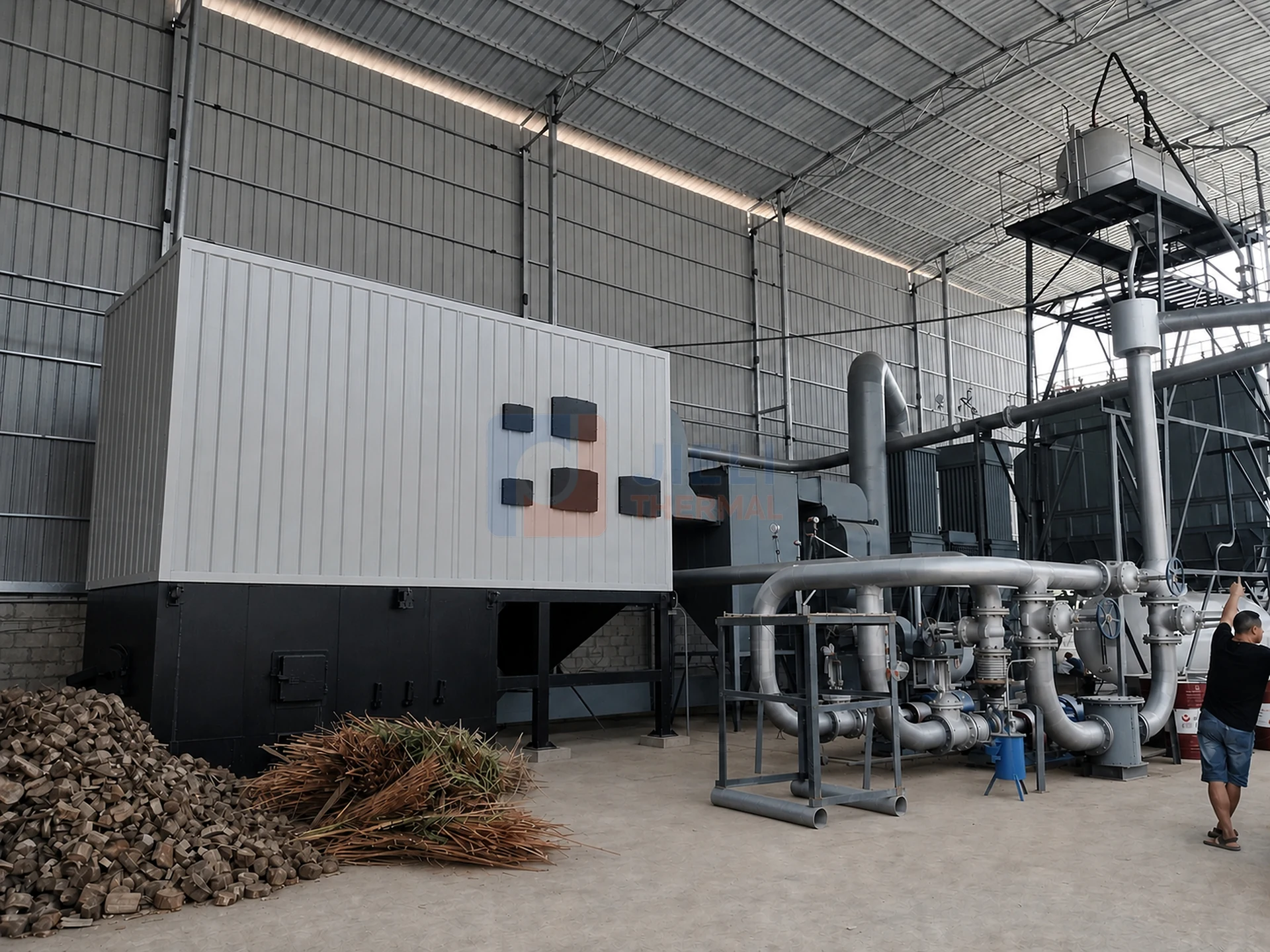
A project reference for indirect process heat where fuel properties, grate design and circulation conditions must be matched together.
Open Vietnam page →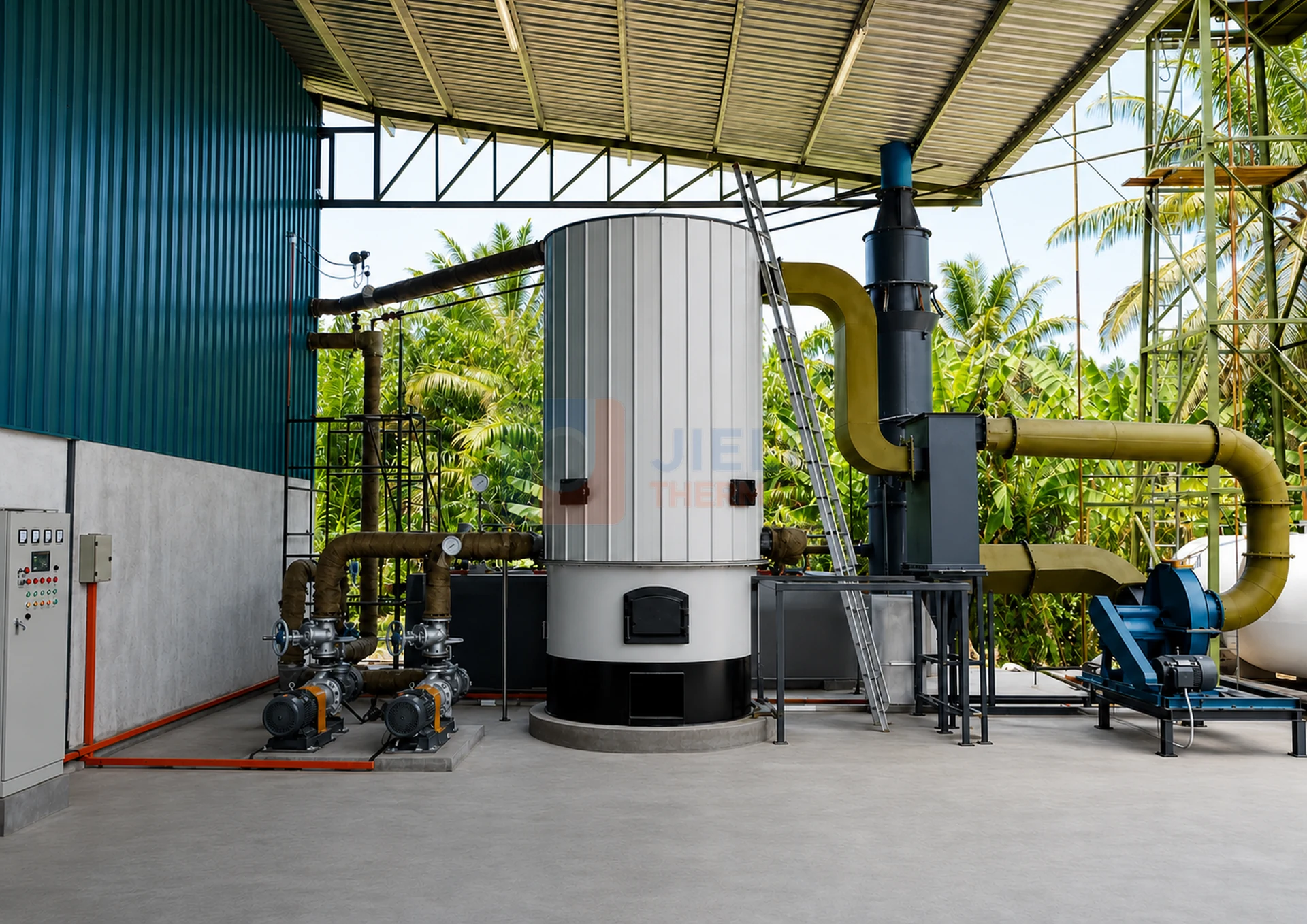
A compact field reference that complements the Malaysia and Penang selection guide for gas, oil or biomass project screening.
Read Malaysia guide →FAQ
In most industrial searches the terms describe the same equipment family. The final design still depends on heat duty, film temperature, circulation flow, fuel and expansion arrangement.
Not automatically. Bulk density, moisture, ash chemistry, size and combustion behaviour differ. Fuel flexibility has to be designed into feeding, grate, furnace, air distribution and gas cleaning.
Provide a recent analysis of make-up water, expected condensate return, operating pressure and treatment preference. Water treatment, deaeration and blowdown are part of system efficiency and reliability.
The equipment and document scope can be configured for the project, but local registration, inspection and code acceptance must be confirmed by the owner with the competent local authority before manufacture.
Southeast Asia RFQ
Include application, capacity, temperature or pressure, fuel analysis, water quality, electricity, emissions, site city and required auxiliaries. We will identify the missing engineering inputs before proposing a model.