


Gas / oil-fired steam boiler
1–20 t/h, preliminary pressure range 1.0–2.5 MPa. Review gas or oil supply, burner turndown, feedwater temperature and condensate return alongside the WNS model table.
STEAM BOILER MANUFACTURER IN CHINA
JIELI manufactures industrial steam boilers in Linyi, China: gas/oil boilers, 1–20 t/h, and biomass boilers, 1–30 t/h. Compare model data, steam pressure and documented installations. Send capacity, fuel and project country; unknown selection details can be reviewed together.
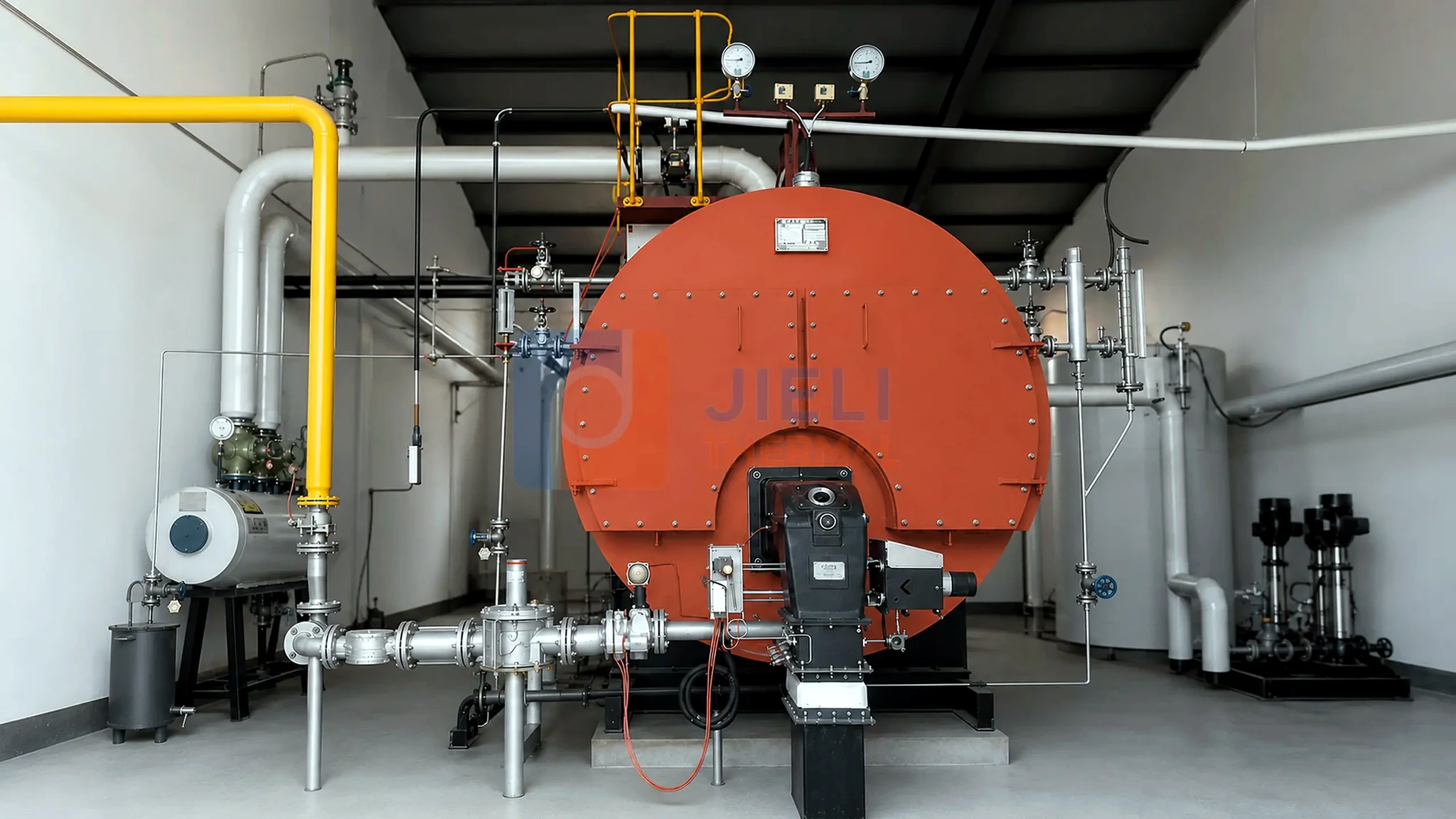
STEAM BOILER PRODUCT FAMILY
As an industrial steam boiler manufacturer, JIELI matches the fire-tube or water-tube arrangement to the required capacity, pressure, steam quality, fuel and water conditions. Confirm transport and erection limits early: a boiler may be delivered assembled, in modules or for site erection, depending on the project.
1–20 t/h, preliminary pressure range 1.0–2.5 MPa. Review gas or oil supply, burner turndown, feedwater temperature and condensate return alongside the WNS model table.
1–30 t/h, preliminary pressure range 0.7–1.6 MPa. Confirm biomass analysis and load profile before comparing grate, fuel handling, draft, ash and emissions scope.
1–30 t/h, preliminary pressure range 0.7–1.6 MPa. Coal data and environmental limits determine the complete configuration.
BOILER TYPE SELECTOR
This comparison is a screening tool, not a final model selection. Confirm steam conditions, load profile, fuel, water quality, emissions, transport and code before manufacture.
| Boiler route | Preliminary capacity | Fuel | Where it is commonly considered | Critical checks |
|---|---|---|---|---|
| WNS fire-tube package | 1–20 t/h | Natural gas, diesel or project-confirmed fuel oil | Compact packaged process-steam duties | Pressure, burner turndown, water treatment, transport and economizer |
| SZS water-tube arrangement | Project-specific | Natural gas or liquid fuel | Larger, variable or project-specific steam duties | Load change, pressure, water chemistry, controls and erection boundary |
| Biomass-fired system | 1–30 t/h | Wood chips, pellets, rice husk and confirmed biomass | Sites with reliable local biomass and suitable handling space | Fuel analysis, storage, feeding, grate, draft, dust and ash systems |
| Coal-fired system | 1–30 t/h | Project-confirmed coal | Markets where coal use and emissions are permitted | Coal analysis, furnace, grate, environmental equipment and local policy |
Separate normal, peak, startup and future demand before adding a stated margin.
Compare fire-tube and water-tube arrangements without treating the model code as the whole specification.
Use steam conditions, feedwater temperature, fuel LHV and net efficiency on one consistent basis.
STEAM BOILER BASICS
A steam boiler is a pressure system that transfers heat into treated water to generate steam at a specified capacity and pressure. In an industrial plant, the useful system is larger than the boiler body: combustion equipment, water treatment, feedwater, controls, heat recovery, blowdown and condensate return all influence reliability and operating cost.
Selection starts with the real steam-user schedule, required pressure and steam condition. It then checks fuel, feedwater temperature, condensate return, turndown, emissions, transport limits and whether the boiler will ship assembled or be erected at site.
Calculate steam boiler capacity Review the steam-system piping basis
MANUFACTURING & INSPECTION
Review JIELI's workshop processes, pressure-part fabrication and export projects alongside the proposed steam boiler specification. Confirm the design code, inspection records and delivery responsibilities in the quotation.
The Linyi workshop records show plate preparation, forming, welding, heat-transfer assembly and inspection stages. Request the project-specific material traceability and inspection document list when reviewing a steam-boiler proposal.
Each project reference identifies the destination, capacity, model and stage shown in the photographs, such as workshop loading or installation.
Applicable ASME or CE/PED engineering requirements are reviewed project by project. The proposal identifies the agreed design, inspection and documentation basis.
Water treatment, feedwater, fuel equipment, heat recovery, condensate, controls and site interfaces are coordinated with the boiler rather than left implicit.
SELECTION DATA
Nominal tons per hour alone do not define a stable steam plant. Use the same operating basis when comparing suppliers.
| Input | Why it matters |
|---|---|
| Normal, peak and minimum demand | Determines capacity, turndown, number of units and operating strategy. |
| Steam pressure and condition | Changes useful heat, fuel use, pressure-part design and downstream equipment. |
| Feedwater and condensate return | Feedwater temperature and return percentage affect duty, chemistry and operating cost. |
| Fuel | Natural gas, diesel, oil, biomass and coal require different combustion and auxiliary systems. |
| Water quality | Determines treatment, blowdown and risks of scale, carryover and corrosion. |
| Country and emissions | Local code, altitude, power supply, NOx or particulate limits affect the configuration. |
TPH & CAPACITY GUIDE
One metric ton per hour (t/h or TPH) equals 1,000 kg/h of nominal steam evaporation. Tonnage alone does not define fuel consumption or usable heat: steam pressure, feedwater temperature, condensate return, blowdown, efficiency and the load profile all change the result.
| Example steam duty | Nominal evaporation | Mass flow | Selection point still required |
|---|---|---|---|
| 1 t/h | 1 t/h | 1,000 kg/h | Pressure, fuel and minimum load |
| 2 t/h | 2 t/h | 2,000 kg/h | Peak demand and burner turndown |
| 4 t/h | 4 t/h | 4,000 kg/h | Feedwater and condensate return |
| 6 t/h | 6 t/h | 6,000 kg/h | Normal versus startup demand |
| 10 t/h | 10 t/h | 10,000 kg/h | Fire-tube or water-tube arrangement |
| 12 t/h WNS project | 12 t/h | 12,000 kg/h | Pressure, burner, code and auxiliaries |
| 20 t/h | 20 t/h | 20,000 kg/h | Fuel analysis, grate, dust and ash scope |
A 10 TPH rating means 10,000 kg/h of nominal steam flow; it does not specify fuel use or construction. Compare output at the same pressure and feedwater temperature, then check normal and peak demand, fuel data, emissions limits and supply boundary.
COMPLETE STEAM BOILER SYSTEM
A complete steam boiler system may include water treatment, feedwater tank and pumps, boiler, burner or solid-fuel system, economizer, steam header, blowdown, condensate return, chimney, controls and project piping interfaces. The final boundary must be written into the proposal.
For an industrial gas-fired steam boiler, confirm gas supply pressure and composition, normal and peak steam demand, feedwater conditions and emissions limits before selecting the burner and controls.
Treatment, deaeration or feedwater heating, condensate return and blowdown affect reliability, efficiency and steam quality.
Burner or fuel control, water level, feedwater, pressure, draft, interlocks and alarm logic must support the real load profile.
PROCESS APPLICATIONS
Industrial steam serves food processing, breweries, textile finishing, pharmaceuticals, chemical processing, paper production, feed mills and laundries. Distinguish direct steam injection from indirect jacket or exchanger heating, then record batch peaks, required steam quality and which condensate streams can be returned.
Review direct or indirect use, hygiene boundary, peak batch demand and condensate recovery.
Map dyeing, washing, finishing and line start-up to normal, minimum and peak steam demand.
Fuel availability, water, altitude, electrical supply, emissions, transport and local inspection all matter.
STEAM BOILER PROJECTS
The Argentina WNS12-1.25 reference records a 12 t/h gas-fired steam boiler with a DB burner and coordinated gas-train and control scope. The Indonesia photograph records a 30 t/h boiler at the loading stage. Use the first to review the documented equipment scope and the second to discuss transport constraints; neither replaces your project data sheet or inspection plan.
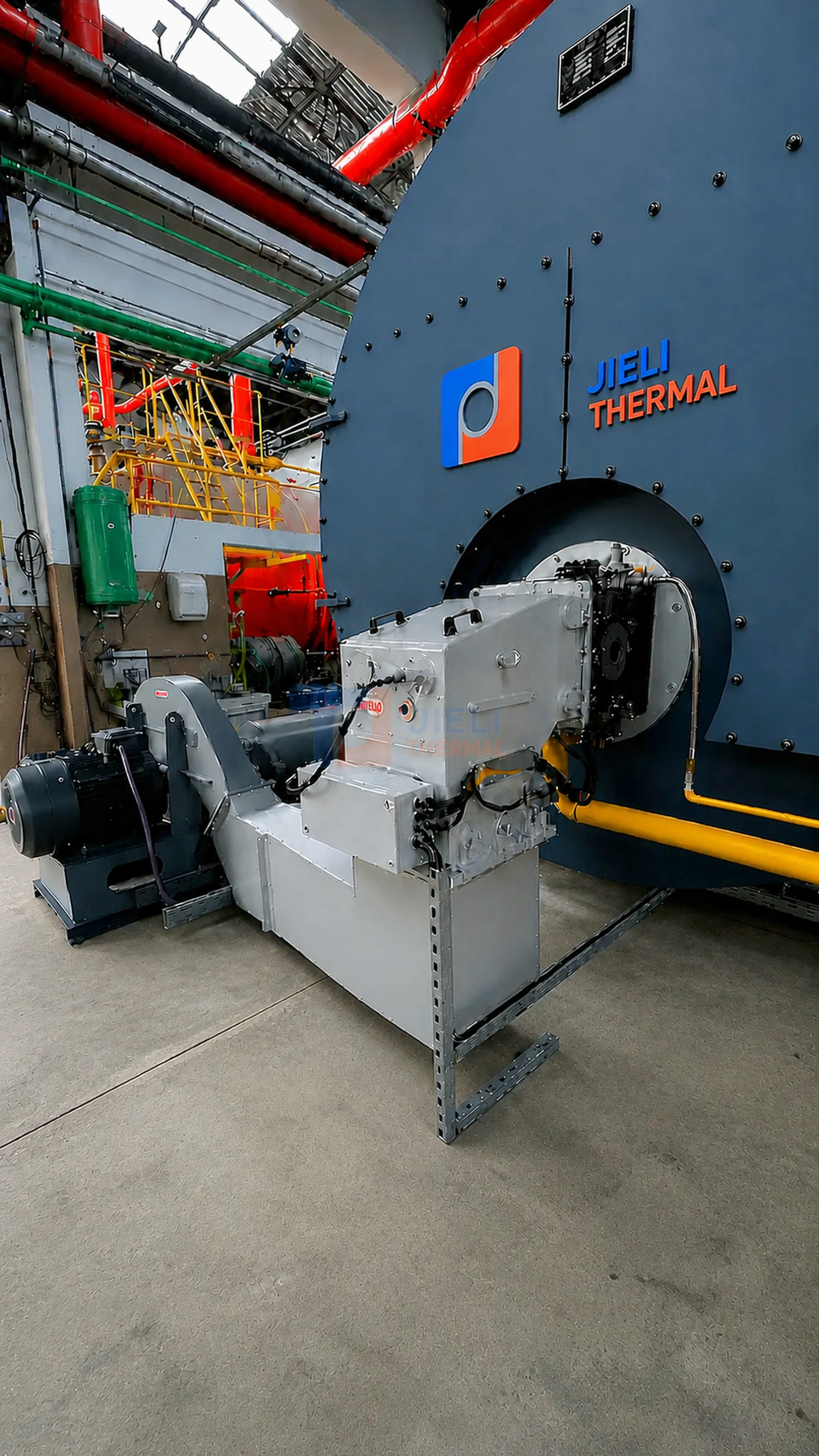
ARGENTINA · WNS12-1.25
A documented WNS steam-boiler reference linking model, rated output, burner arrangement and project destination.
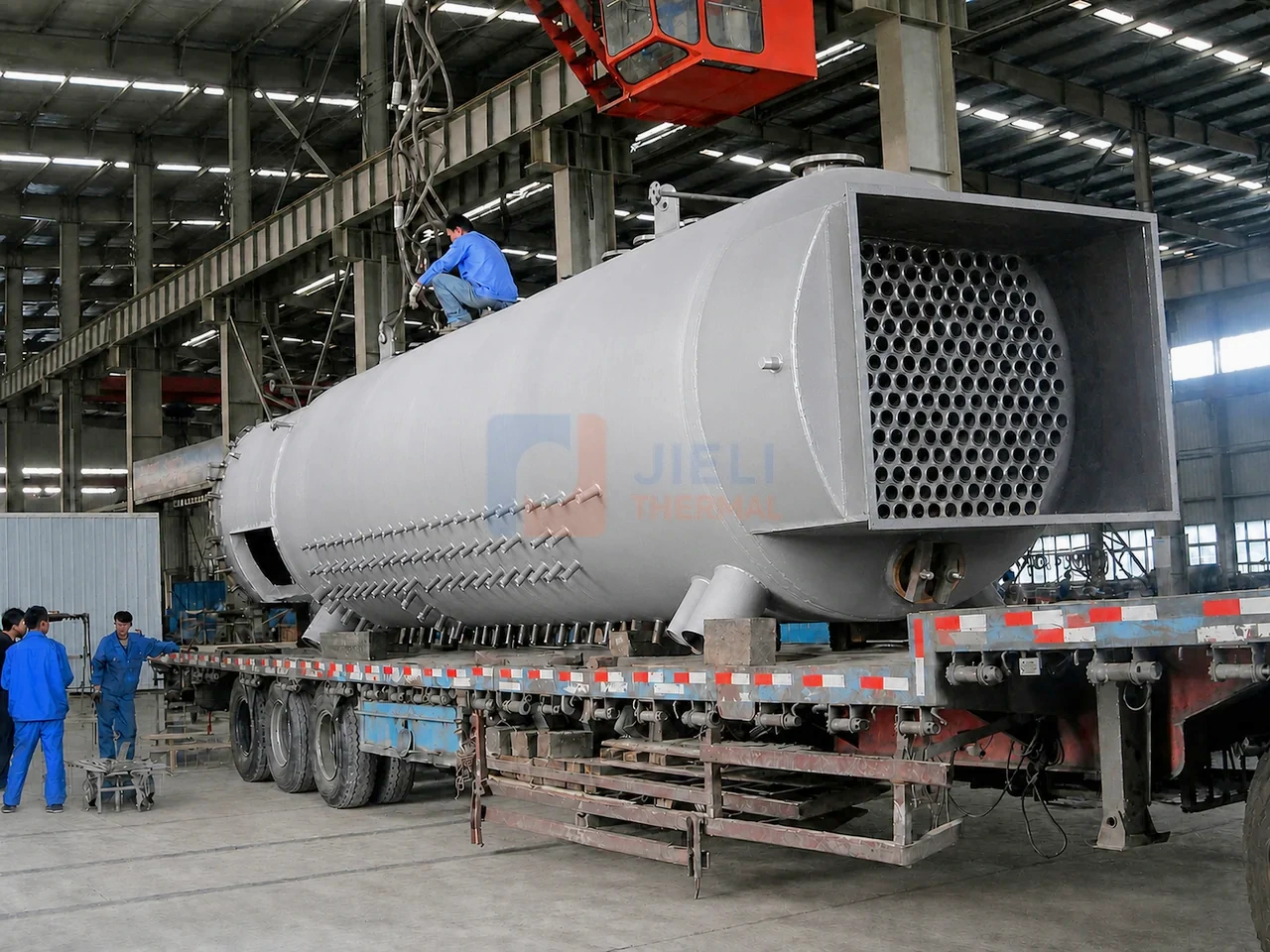
INDONESIA · DELIVERY
The workshop loading photographs show the boiler before shipment. Check the shipping dimensions, lifting requirements and delivery scope for your order.
BUYER KNOWLEDGE
Use these guides to prepare an engineering-based RFQ instead of comparing boiler-shell prices with different supply boundaries.
Normal demand, peak load, startup, losses and design margin.
Water treatment, feedwater, steam distribution, blowdown and condensate return.
Compare code basis, pressure parts, water system, combustion, inspection and lifecycle scope.
Match a gas, oil or dual-fuel burner to steam duty, turndown, fuel trains, controls and safeguards.
Screen heat recovery from stack temperature, feedwater demand, dew point, fouling and pressure drop.
Compare construction, load response, pressure, footprint, transport and maintenance on one project basis.
STEAM PROJECTS & PROCUREMENT
The Argentina 12 t/h gas-fired steam boiler connects the model, pressure and project photographs. The Indonesia 30 t/h shell-type boiler shows why transport and loading requirements belong in the specification.
For a new installation, confirm the steam load profile, make-up water analysis, condensate return and erection boundary. Regional guides help prepare those inputs without assuming that one country or one photographed installation defines every project.
STEAM BOILER FAQ
These questions connect capacity, construction, fuel and auxiliary scope. Final values remain project-specific and are confirmed against the applicable code and approved design data.
Send Project DataStart with normal, peak and minimum steam demand, required pressure, feedwater temperature, condensate return, operating schedule and future expansion. TPH alone is not enough because startup demand, blowdown, distribution loss and burner or fuel-system turndown affect the final selection.
A packaged WNS fire-tube boiler is commonly considered for compact gas or oil-fired duties, while an SZS water-tube arrangement may suit larger, more variable or project-specific steam conditions. The final choice depends on pressure, load profile, transport limits, water quality, emissions and the applicable code.
A compatible dual-fuel burner can support natural-gas and fuel-oil operation, but the burner, fuel trains, valves, controls, purge sequence and changeover logic must be engineered together. Fuel pressure, composition and the project safety standard must be confirmed before selection.
Provide the biomass type, particle size, moisture, ash, lower heating value, bulk density, contaminants and seasonal variation. This information affects storage, feeding, furnace volume, grate, draft, dust collection, ash handling and the reliable steam output.
A project scope may include the boiler, burner or solid-fuel equipment, water treatment, feedwater tank and pumps, economizer, blowdown equipment, condensate return, chimney, valves, instruments and control cabinet. The proposal should state every supply and site-work boundary explicitly.
Send steam capacity and pressure, normal and peak load, fuel data, feedwater temperature, condensate-return rate, operating hours, industry, project country, altitude, electrical supply, emissions limits, code requirements and available boiler-room dimensions.
A steam boiler transfers heat into treated water to generate steam at a specified capacity and pressure. Reliable industrial operation depends on the complete system: combustion, water treatment, feedwater, controls, heat recovery, blowdown and condensate return.
Direct contact and indirect heating require different steam-quality checks. For steam injected into food or used in a hygiene-critical process, specify the required steam grade, permitted water-treatment chemicals and quality at the point of use. Depending on the process standard, filtration or a separate clean-steam generator may be needed. Boiler pressure and evaporation capacity alone do not establish suitability for food contact.
PROJECT DATA TOOLS
Download the fillable checklist or spreadsheet before requesting a configuration. Normal and peak steam load, pressure, fuel, water analysis, operating schedule, project country and required supply scope help our engineers prepare a clearer first proposal.
ENGINEERING INPUTS
Start with your application, project country, available fuel and estimated steam demand. Add the required pressure if known; unknown values can be reviewed with our engineers. We will clarify the feedwater, condensate, emissions and installation scope before preparing a comparable proposal.