


Engineering features
- Fuel-specific grate and feeding arrangements
- Integrated combustion-air and draft control
- Thermal-oil circulation protection logic
- Dust collection and heat-recovery options
Thermal Oil Heater
Compare YLW biomass thermal oil heater models, fuel requirements and documented projects. Start with heat duty, oil temperature and available biomass; confirm moisture and ash before final selection.
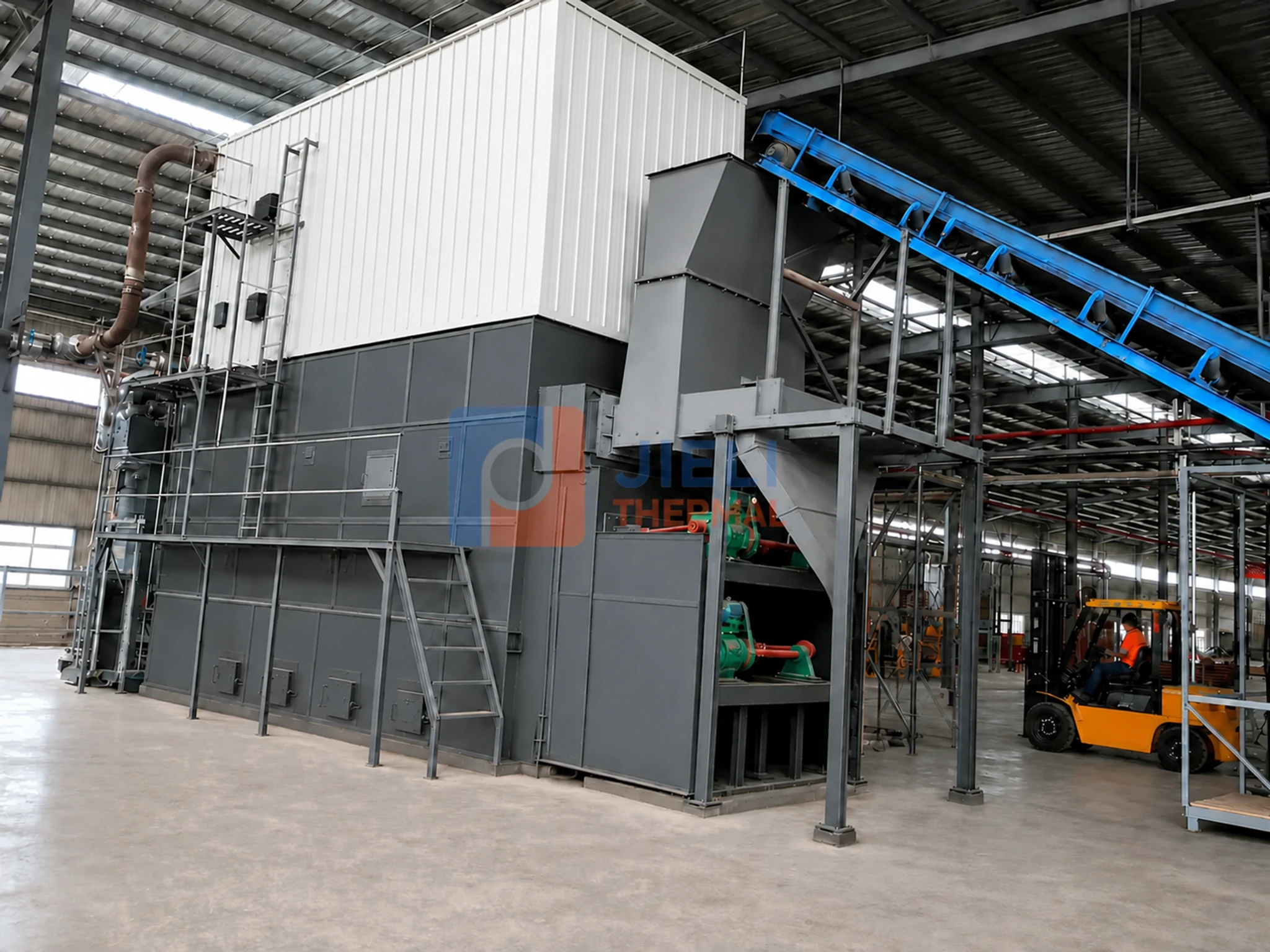
System overview
JIELI biomass thermal oil heater packages use a circulating liquid heat-transfer fluid rather than producing steam. Compare the YLW model heat-duty and circulation data with your oil temperatures and available wood chips, pellets or project-approved residues. The YLW250, 2,800 kW Surabaya workshop reference shows one confirmed supply basis; it is not a fuel-performance guarantee. Fuel analysis determines the furnace, feeding, ash and emissions equipment included with the thermal-fluid loop.
Equipment and project gallery
JIELI THERMAL equipment and manufacturing views. Some images are digitally retouched for presentation; these are not unaltered site records. Select an image to read its description.
Biomass projects by rated capacity: South America 1,600,000 kcal/h, Sri Lanka 4,000,000 kcal/h wood-chip biomass thermal oil heater export, Chile 3,000,000 kcal/h export, Argentina 6,000,000 kcal/h and Ethiopia 25,000,000 kcal/h.
Workshop photographs and equipment illustration for a YLW250 biomass-fired thermal oil heater rated at 2800 kW, for a project in Surabaya, Indonesia. These views document equipment and fabrication; they do not establish commissioned performance.
Download the YLW250 / Surabaya project reference (PDF, English / Español). Rated thermal power: 2800 kW (2.8 MW). The reference separates the confirmed project facts from oil-circuit, biomass-fuel and flue-gas requirements that must be agreed for a similar installation. It links back to these equipment views and directly to our project team.
Technical parameters
The table below is translated from the technical data supplied for this product family. Final selection is confirmed against your fuel, operating conditions and project requirements.
| Model | Rated thermal power (kW) |
|---|---|
| YLW-120MA | 1400 |
| YLW-240MA | 2800 |
| YLW-500MA | 6000 |
| YLW-1000MA | 12000 |
Selected entries from the complete catalogue below. Confirm fuel moisture and ash, useful heat duty, oil temperatures and circulation before selection. Project equipment designations are retained separately from catalogue model designations.
| Technical parameter | Unit | YLW-120MA | YLW-160MA | YLW-200MA | YLW-240MA | YLW-300MA | YLW-350MA | YLW-400MA | YLW-500MA | YLW-600MA | YLW-700MA | YLW-800MA | YLW-900MA | YLW-1000MA | YLW-1200MA | YLW-1400MA | YLW-1600MA | YLW-2000MA |
|---|---|---|---|---|---|---|---|---|---|---|---|---|---|---|---|---|---|---|
| Rated heating capacity | ×10⁴ kcal/h | 120 | 160 | 200 | 240 | 300 | 350 | 400 | 500 | 600 | 700 | 800 | 900 | 1000 | 1200 | 1400 | 1600 | 2000 |
| Rated thermal power | kW | 1400 | 1800 | 2400 | 2800 | 3500 | 4100 | 4600 | 6000 | 7000 | 8200 | 9300 | 10500 | 12000 | 14000 | 16500 | 19000 | 24000 |
| System thermal efficiency | % | 81.5 | 82.38 | 82.07 | 82.38 | 82.44 | 82.02 | 82.36 | 82.67 | 82.5 | 82.58 | 83.22 | 83.14 | 83.52 | 83.15 | 84.02 | 84.15 | 84.26 |
| Rated working pressure | MPa | 1 | 1 | 1 | 1 | 1 | 1 | 1 | 1 | 1 | 1 | 1 | 1 | 1 | 1 | 1 | 1 | 1 |
| Maximum working temperature | °C | 320 | 320 | 320 | 320 | 320 | 320 | 320 | 320 | 320 | 320 | 320 | 320 | 320 | 320 | 320 | 320 | 320 |
| Heater oil capacity | m³ | 1.56 | 1.8 | 2.2 | 2.94 | 3.47 | 3.82 | 5.12 | 5.88 | 7.8 | 8.4 | 9.31 | 10.38 | 11.52 | 13.2 | 18.4 | 21.1 | 26.3 |
| Circulation flow rate | m³/h | 100 | 100 | 160 | 200 | 200 | 230 | 250 | 300 | 400 | 400 | 500 | 500 | 500 | 800 | 900 | 1000 | 1350 |
| Main pipe size | mm | 150 | 150 | 150 | 200 | 200 | 250 | 250 | 250 | 250 | 250 | 300 | 300 | 350 | 400 | 400 | 600 | 600 |
| Whole-system installed power | kW | 47 | 68 | 71.5 | 97.5 | 101.3 | 111.8 | 145.7 | 177.5 | 217.5 | 275 | 276.7 | 310 | 308.2 | 407.2 | 497.9 | 580.4 | 712.4 |
| Available fuel | — | Biomass pellets and other project-specified biomass fuels | ||||||||||||||||
| Heater body length | mm | 5414 | 6083 | 6170 | 7182 | 7160 | 7970 | 7916 | 9020 | 9516 | 9820 | 11120 | 11540 | 12100 | 13176 | 15090 | 15090 | 15090 |
| Heater body width | mm | 2380 | 2385 | 2370 | 2880 | 2878 | 3080 | 3212 | 3360 | 3635 | 3605 | 3605 | 3860 | 3956 | 4306 | 4950 | 4950 | 4950 |
| Heater body height | mm | 4646 | 4735 | 4895 | 4891 | 5257 | 5340 | 5410 | 5343 | 5683 | 5800 | 5817 | 5840 | 5920 | 6943 | 7350 | 10350 | 13350 |
| Approximate heater body weight | t | 26 | 32 | 34 | 36 | 42 | 49 | 54 | 68 | 82 | 88 | 94 | 110 | 120 | 150 | 200 | 220 | 250 |
Values are translated from the supplied technical parameter sheets and are intended for preliminary selection. Product data may be updated as designs evolve; final performance, dimensions and configuration are subject to the confirmed technical proposal.
Download 17 YLW model records and project input sheet (Excel, EN / ES). Filter the models and fill in your project requirements before requesting a proposal. Published catalogue data for preliminary selection; final dimensions and operating conditions require technical confirmation.
INTEGRATED BIOMASS HEATING
A biomass thermal oil heater or biomass-fired thermal oil heater must be engineered around fuel size, moisture, ash behavior, feeding stability and process heat demand.
The reliable system boundary includes fuel storage and feeding, combustion, heater coils, circulation, expansion, draft, dust collection, controls and heat recovery where practical.
Selection starts with data
For a wood-chip or pellet thermal oil heater, fuel moisture, size and ash affect the feeding system, furnace, grate and dust-control scope. Compare these alongside useful heat output, circulation pumps, tanks and controls. Use the biomass fuel-consumption calculation to distinguish purchase price from running cost; a heater-only offer is not a complete-system quotation.
BIOMASS FUEL ACCEPTANCE
A biomass thermal oil heater should be specified against representative fuel samples, not just a fuel name. Send the normal and worst expected moisture, particle size, ash and as-fired lower heating value. These inputs determine storage, feeding, furnace and grate selection, ash handling and the achievable continuous heat output.
State moisture variation, particle-size distribution, fines and bulk density. A wood-chip feeding system is not automatically suitable for fine sawdust or pellets. Confirm fuel handling, stable feeding and combustion control before choosing the heater capacity.
For rice husk, palm kernel shell and other residues, provide ash content, ash-fusion behavior and relevant contaminants as well as moisture and heating value. Review slagging, fouling, dust collection and ash discharge; suitability requires a project-specific fuel assessment.
Separate useful heat output from fuel input. State supply and return temperatures, operating load, country, altitude and emissions limits. Compare consumption using the same as-fired fuel and efficiency basis; our biomass fuel consumption guide explains the calculation and moisture effect.
Other solutions
 Priority solution
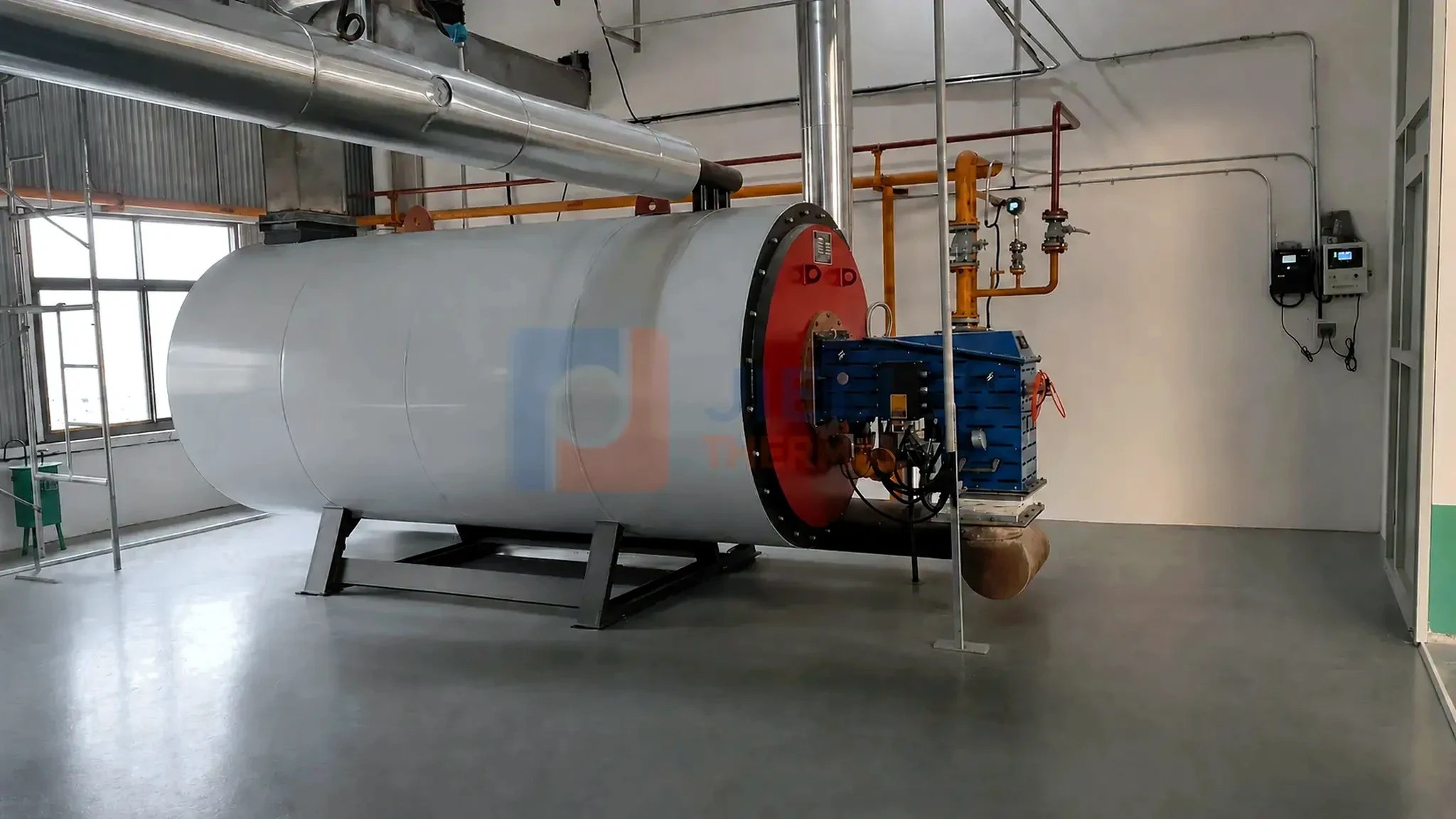
Thermal Oil Heater
Precisely controlled high-temperature process heating with clean combustion and flexible system integration.
View solution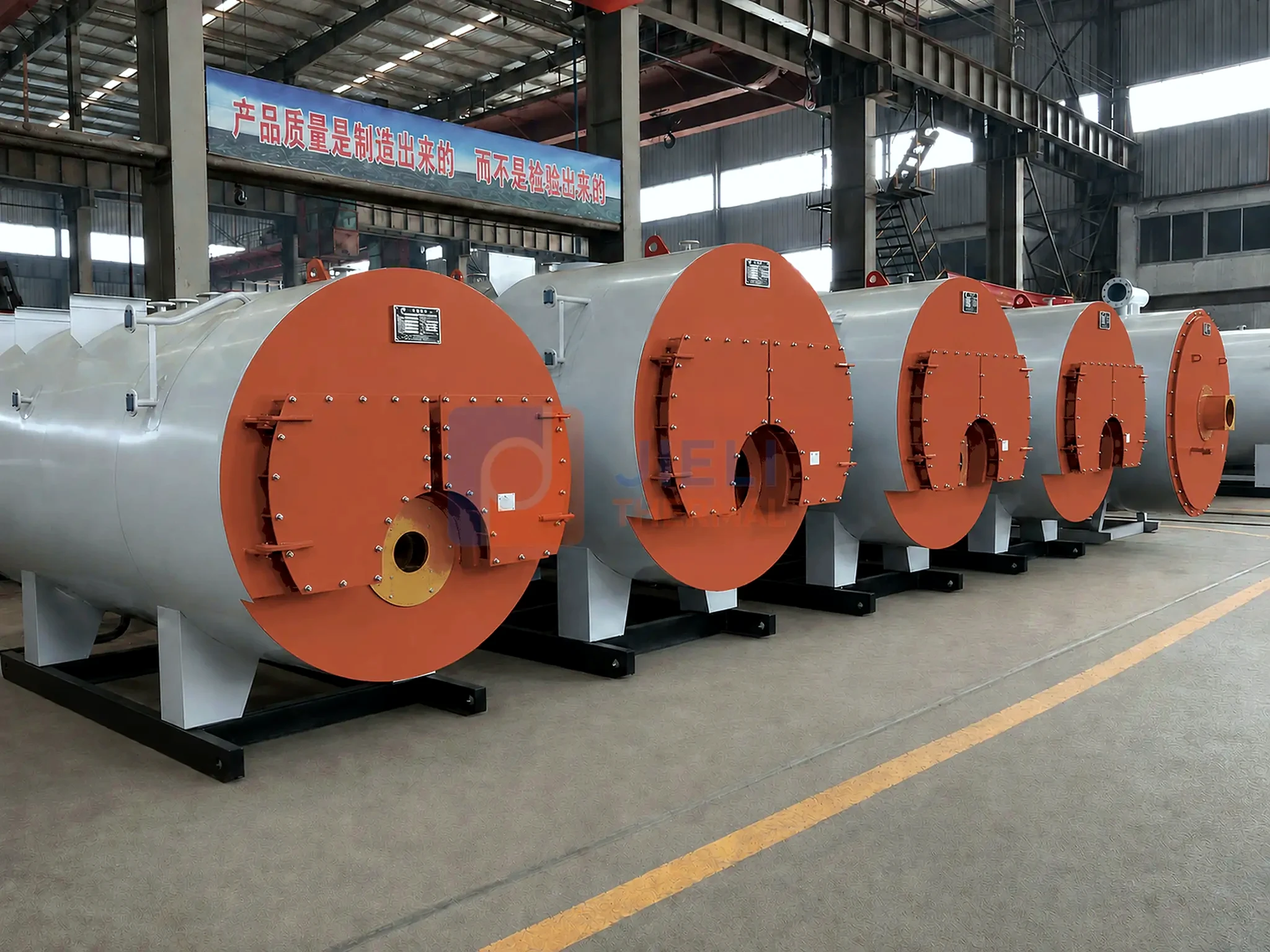 Priority solution
Steam Boiler
Industrial steam generation with compact integration, automated control and project-specific auxiliary systems.
View solution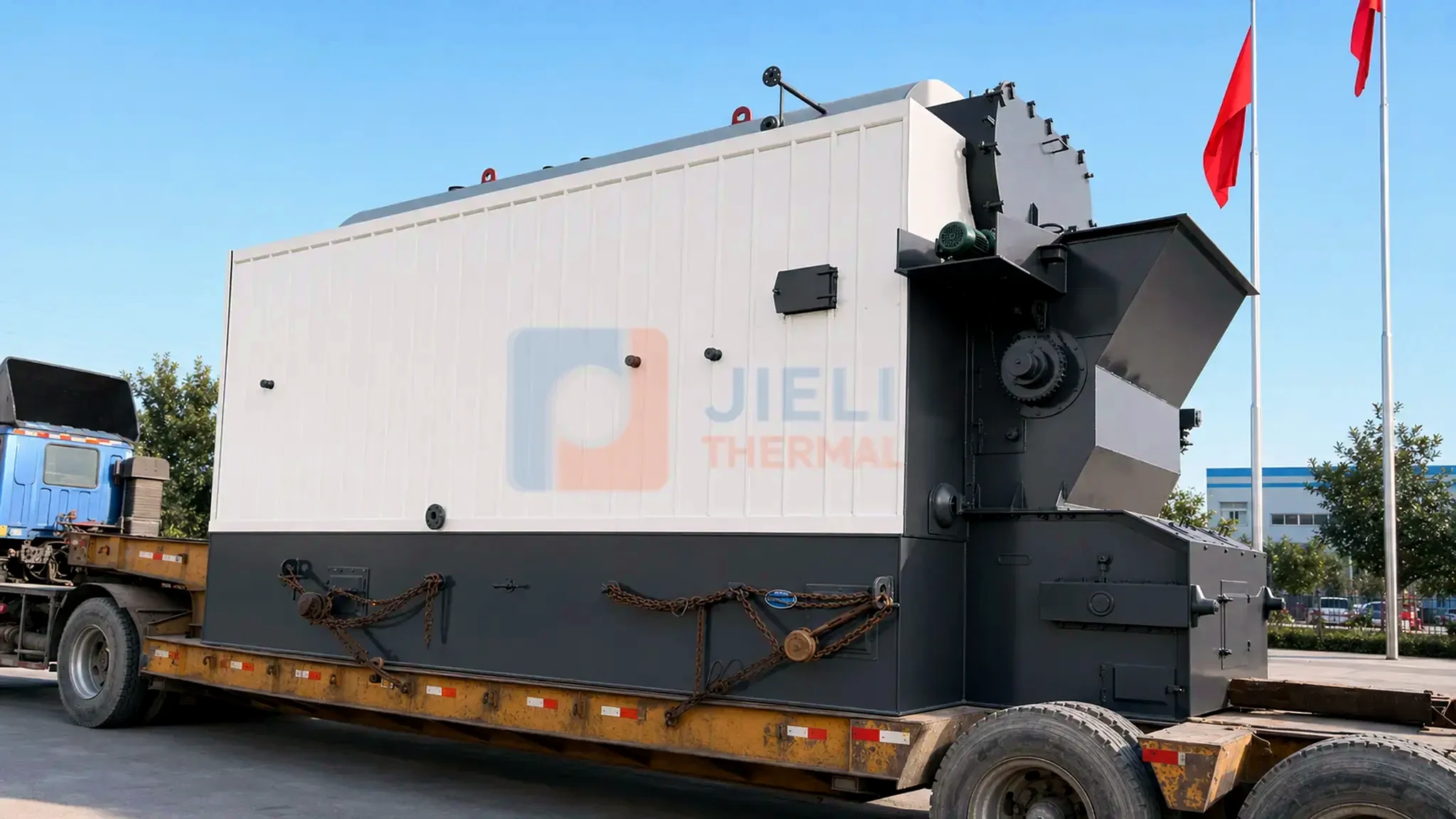
Steam Boiler
Fuel-adapted biomass steam systems for continuous industrial production and complete plant integration.
View solutionTextile process engineering
The textile industry thermal oil heating guide explains how stenters, dryers, dyeing and finishing loads influence fuel choice, turndown, circulation, dust management and the complete plant boundary.
Start with the thermal oil flow and pipe-size calculation, then use the circulation pump guide to prepare fluid, flow and pressure-loss inputs.
Use the expansion tank guide to distinguish calculated expansion volume from total vessel volume.
Regional fuel engineering
Compare the Chile biomass thermal oil heater, Thailand system and Vietnam project with your own plant requirements. Wood chips, rice husk and palm residues require separate fuel assessments. For a Malaysian project, the Malaysia and Penang guide remains available.
Confirm moisture, ash, volatile matter, net calorific value, particle-size range, contaminants and ash-fusion behavior. Those results affect the grate, furnace volume, fuel feeding, dust collection and temperature-control strategy. If the plant instead requires process steam, compare the biomass steam boiler system.
Provide required duty, operating temperature or steam pressure, hourly load profile, fuel analysis, project location, altitude, power supply, emissions limits and available layout. JIELI THERMAL can then define an appropriate equipment and auxiliary scope.
BUYER FAQ
These answers provide a preliminary engineering framework. Final configuration depends on the confirmed fuel, duty, site conditions, local requirements and contracted supply boundary.
Open the manufacturer evaluation checklistUse the biomass thermal oil heater fuel-consumption calculation to connect useful duty, as-fired LHV and efficiency before comparing supplier guarantees.
For wood-panel projects, define cycles and simultaneous load with the plywood hot-press sizing guide. Before first heat, use the startup and dehydration checklist.
Provide representative moisture, ash, net calorific value, particle size, bulk density, contaminants and ash behavior, plus expected variation between fuel batches.
The pump must maintain the design flow through the heater and process loop at operating temperature. Flow, hot-fluid properties, system pressure drop, NPSH and minimum-flow protection must be checked together.
Depending on the confirmed boundary, scope may include fuel storage and feeding, furnace and heater, circulation and expansion equipment, draft and dust control, ash handling, heat recovery, controls and project documents.
Only after the proposed fuel range is analyzed and the feeding, furnace, grate, air distribution, dust and ash systems are confirmed for that variation. Do not assume all biomass fuels are interchangeable.
Send heat duty, supply and return temperatures, thermal-fluid data, operating schedule, fuel analysis, site altitude and ambient conditions, emissions limits, layout, power supply and requested supply scope.
STARTUP & SYSTEM SUPPORT
JIELI’s original thermal oil boil-out notes explain pressure fluctuations, pump behavior and expansion-tank level. Review the staged observation example with your commissioning team and download the startup observation log.
Start a project
Start with approximate capacity, fuel, application and country; mark missing values as "not known yet". We can review the technical basis and supply options before preparing a project-specific quotation. Use the form, email or WhatsApp.