


MALAYSIA & PENANG PROCESS-HEATING GUIDE
Thermal Oil Heater for Malaysia and Penang: Project Selection Guide
For a Malaysia or Penang project, specify duty, oil temperatures, fuel quality, circulation and local installation requirements.
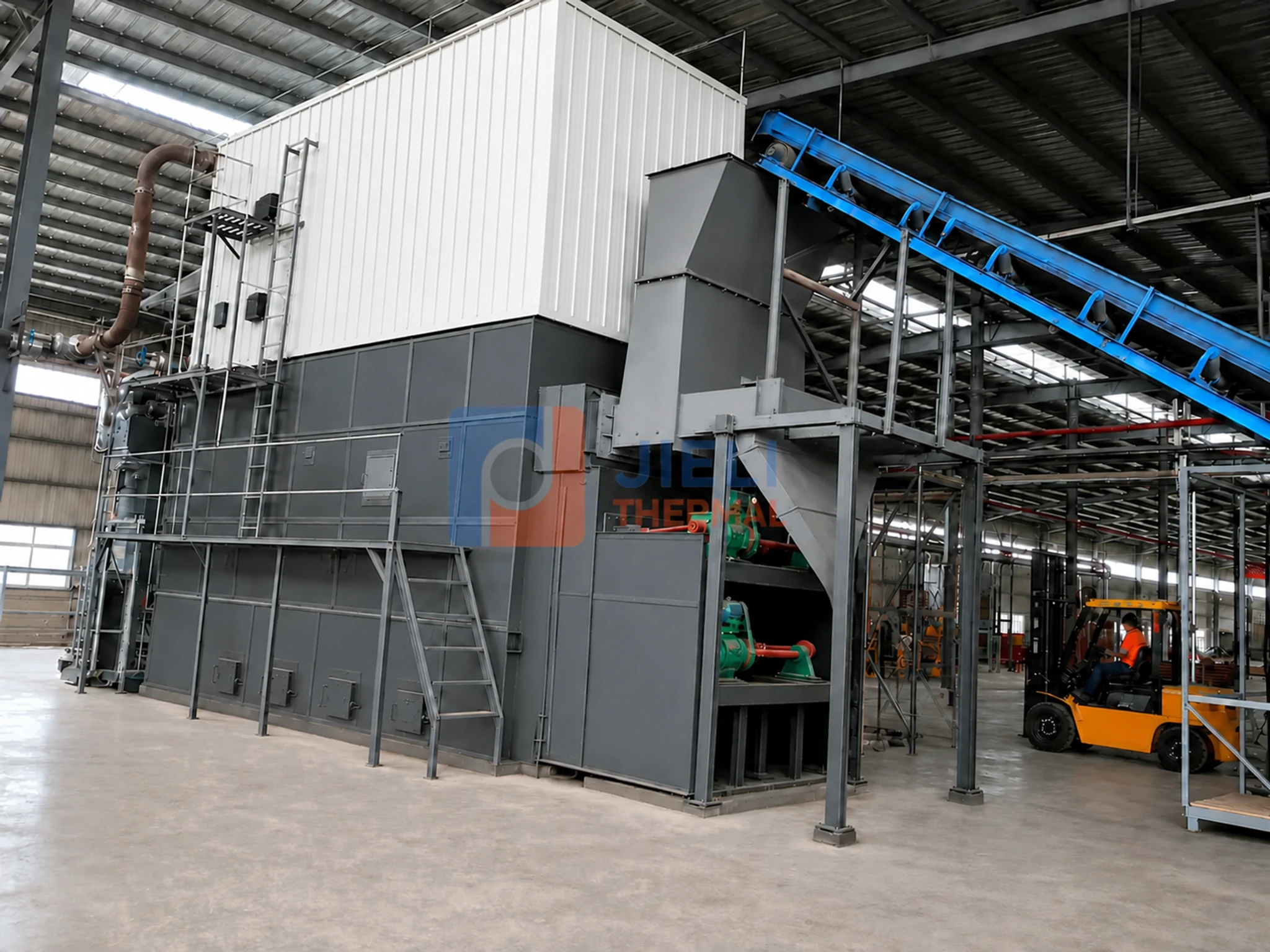
THE SHORT ANSWER
Start with process and fuel data, then define the complete loop.
Process basis
- Normal, peak and start-up heat duty;
- Required supply and return temperatures;
- Operating hours, turndown and process users.
Project basis
- Representative fuel analysis and supply reliability;
- Site layout, ambient exposure and utilities;
- Local code, emissions and documentation requirements.
Confirm process and site data before selecting the heater and auxiliaries.
01 · PROCESS BASIS
Calculate duty before selecting heater capacity.
List process users, normal and startup loads, simultaneous operation and required heat-up time. Check peak duty and minimum load.
Specify user temperature, return temperature and control band. Include pipe heat loss and exchanger approach. See the complete thermal oil heater selection workflow.
02 · FUEL ROUTE
Compare fuel routes against the operating reality.
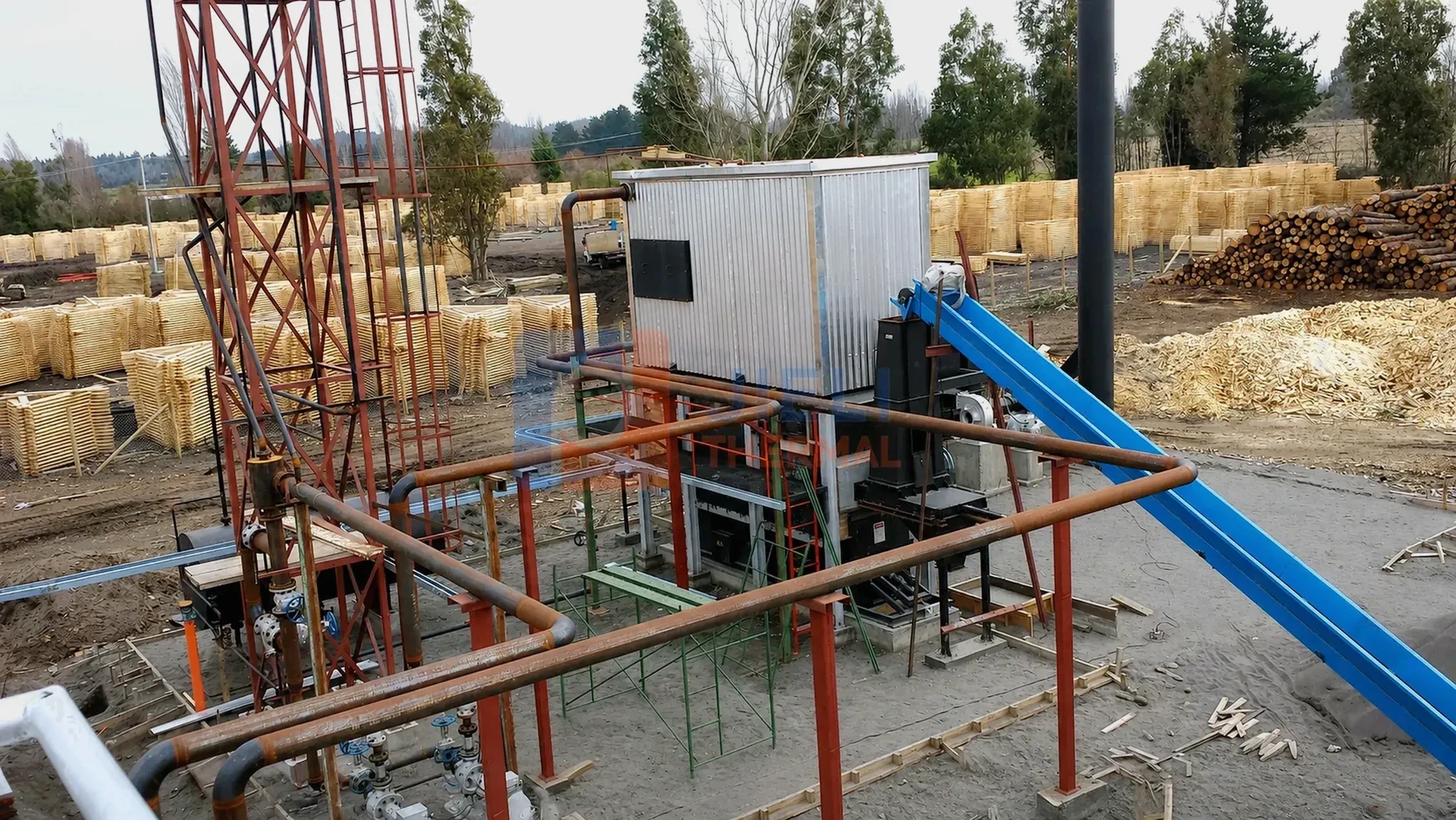
Consider a gas-fired or liquid-fuel thermal oil heater where supply is reliable. A biomass-fired thermal oil heater also requires space and operating resources for storage, feeding, ash and emissions control.
Compare delivered useful heat cost, fuel consistency, auxiliary power, staffing and maintenance.
03 · BIOMASS ANALYSIS
Use representative fuel data for PKS, wood residues or pellets.
For PKS, wood residues or pellets, test representative moisture, ash, heating value, particle size, bulk density, contaminants and ash behavior. Record seasonal variation.
Use this analysis to select storage, feeding, furnace, air/draft, dust collection and ash equipment.
04 · THERMAL-FLUID LOOP
Protect circulation and fluid life at every load.
Calculate common-circuit and controlling-branch pressure losses. Maintain minimum heater flow as users close, and define standby-pump and loss-of-flow responses.
Size expansion capacity from the selected fluid’s density change. Check suction pressure, venting, bulk/film limits and heat-input interlocks.
05 · SITE CONDITIONS
Review layout, weather exposure and maintainability.
Confirm whether equipment is indoors, under a shelter or fully exposed. Review rain protection, drainage, ventilation, corrosion protection, electrical enclosure requirements, access for tube or coil inspection, fuel delivery routes, ash removal and lifting space. Coastal exposure, humidity and plant contaminants should be evaluated from the actual Penang or Malaysia site rather than assumed.
Provide ambient design conditions, altitude, electrical supply, available instrument air, water availability, stack constraints and the distance to process users. The owner or local engineering partner should confirm applicable permitting, emissions, fire-safety and pressure-equipment requirements.
06 · PROJECT INPUTS
Define the proposal boundary so quotations are comparable.
- Heat duty, operating temperature, return temperature and load profile;
- Thermal-fluid type, total inventory and supplier limits;
- Fuel specification, representative analysis and delivery method;
- Process users, piping distance, elevation and proposed layout;
- Ambient conditions, utilities and required electrical standard;
- Emissions limits, code, inspection and documentation requirements;
- Heater, fuel system, pumps, expansion, controls, dust collection and stack boundary;
- Commissioning, training, spare parts and future expansion expectations.
Use these inputs to request a project-specific technical proposal. Where the process requires steam rather than indirect liquid-phase heat, compare the industrial gas-fired steam boiler and biomass steam boiler alternatives.
FREQUENTLY ASKED QUESTIONS
Malaysia thermal oil heater project FAQ
What data is needed to select a thermal oil heater for Malaysia?
Provide normal and peak heat duty, supply and return temperatures, process users, operating schedule, thermal-fluid data, fuel analysis, site location, ambient conditions, available utilities, emissions requirements and the requested supply boundary.
Can palm kernel shell be evaluated for a biomass thermal oil heater?
Yes, but the design must use a representative fuel analysis. Moisture, ash, net calorific value, particle size, contaminants and ash behavior affect storage, feeding, furnace selection, combustion control, dust collection and maintenance.
Should a Penang project use biomass, gas or liquid fuel?
The answer depends on verified fuel availability and quality, operating profile, site space, staffing, emissions requirements and lifecycle cost. The fuel route should be selected from project data rather than location alone.
Does JIELI quote only the heater body?
The proposal can define a project-specific boundary that may include combustion equipment, pumps, expansion and fluid handling, controls, heat recovery, dust collection, stack interfaces, documentation and commissioning support as agreed.