


Chemical
Thermal oil system planning for reactors, distillation, drying and tank heating.

Complete boiler system supply
We coordinate the boiler, fuel equipment, circulation or feedwater, heat recovery, emissions equipment and controls as one practical operating system.
Our engineering path
We avoid treating the boiler, pumps, piping and controls as isolated purchase items. Each step is shaped around how the plant will actually run.
Heat duty, temperature or pressure, load pattern, fuel and site conditions.
Thermal oil or steam, boiler arrangement and the right fuel system.
Pumps, tanks, feedwater, water treatment, piping interfaces and heat recovery.
Protection logic, instrumentation and operator-facing control architecture.
Project documentation, installation guidance and commissioning support.
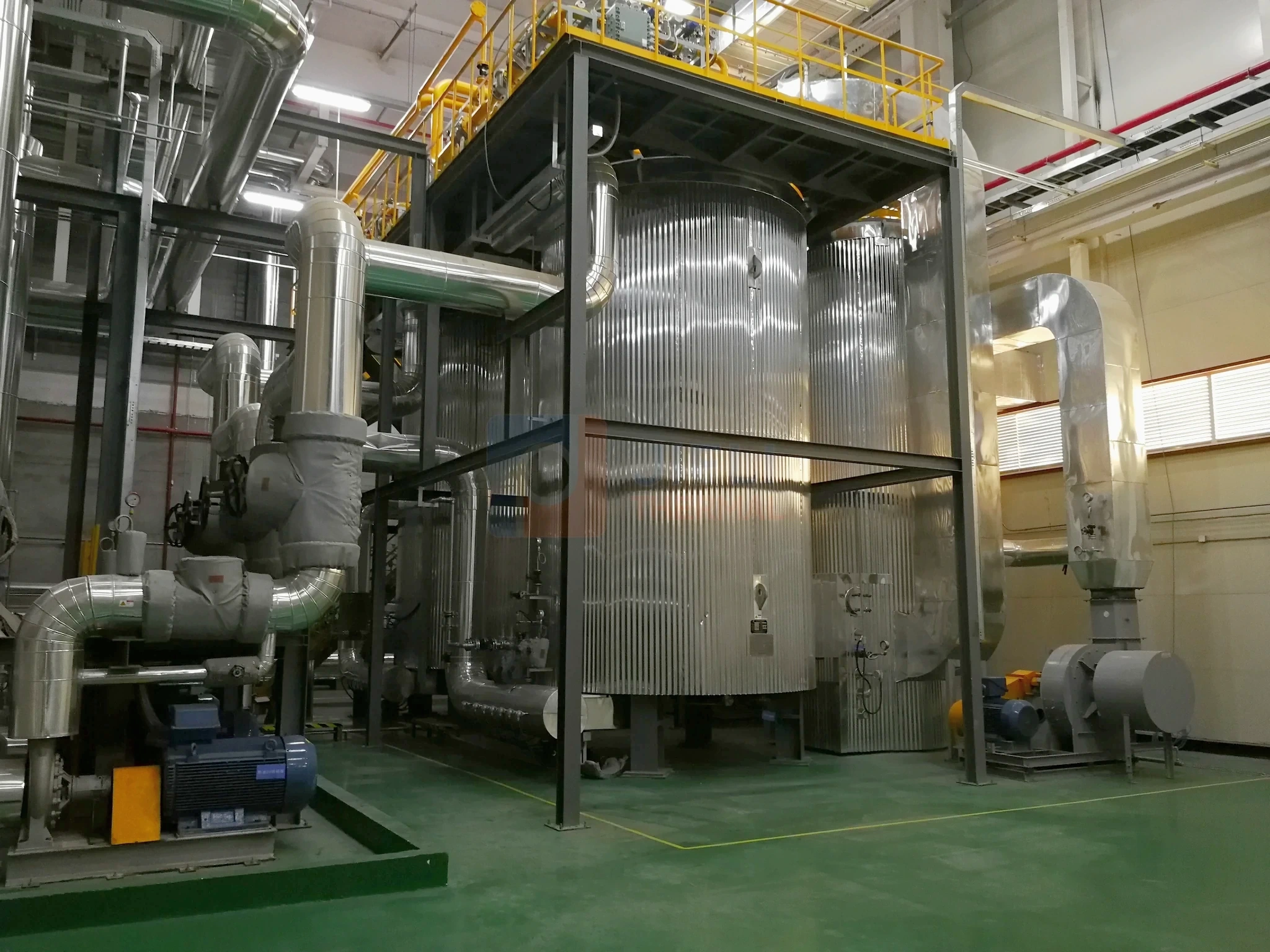
Typical system scope
Industries served
Thermal oil system planning for reactors, distillation, drying and tank heating.
Thermal oil system planning for plywood hot presses, dryers and production-line heat users.
Thermal oil for stenters and heat-setting; steam for dyeing, washing and finishing.
Steam-system planning for cooking, CIP, sterilization, hot water and condensate recovery.
For presses and reactor jackets, specify temperature uniformity, batch cycle and circulation demand in the thermal oil heater selection guide.
Thermal oil planning for bitumen tanks, transfer lines, unloading and holding duty.
WOOD & PANEL APPLICATION
A plywood hot-press heating system must follow the press cycle, platen temperature, warm-up requirement, simultaneous production load and any connected dryers. The heater body, circulation pumps, expansion system, controls and heat users should be checked on the same design basis.
Confirm the number of presses, platen duty, batch cycle, warm-up time, simultaneous operation and whether dryers or other users share the thermal-oil loop.
Supply and return temperatures, thermal-fluid data, user pressure drop, minimum flow and control-valve behavior determine circulation flow, pump head and operating stability.
Natural gas, oil or biomass may be considered from site fuel availability. Wood residues require project-confirmed fuel size, moisture, storage, feeding, combustion, dust and ash arrangements.
| Information to provide | Why it matters for plywood production |
|---|---|
| Press count and platen duty | Defines the connected heat users and simultaneous demand. |
| Operating and return temperatures | Sets the useful temperature difference and circulation basis. |
| Batch cycle and warm-up time | Separates peak demand from steady production load. |
| Dryers and shared users | Prevents omitted loads and unstable system control. |
| Fuel and site conditions | Determines combustion, storage, emissions and auxiliary equipment. |
| Required supply boundary | Clarifies heater, pumps, tanks, controls, heat recovery and interfaces. |
CONCEPTUAL P&ID
This simplified thermal oil system P&ID shows the engineering relationships reviewed before a quotation: circulation, expansion, filling and draining, plus the key protection signals. It is a concept diagram for scope discussion—not an IFC drawing or a substitute for the project P&ID.
Confirm load range, supply and return temperatures, fluid data, coil pressure drop, user resistance, pipe routing and the minimum safe circulation condition.
Confirm total system volume, expansion allowance, tank elevation, venting, filling, draining and whether nitrogen blanketing is required by the fluid and operating regime.
Define which party supplies field instruments, PLC/HMI, burner management, motor control, alarm and trip logic, communications and site cabling.
Project country, local authority and contract determine the applicable code and edition. Where required, ASME or CE/PED engineering and documentation scope is agreed before manufacture; it is not assumed from a generic label.
SYSTEM DELIVERY & RESPONSIBILITIES
A complete industrial boiler system includes more than the boiler body. Specify who supplies the combustion equipment, heat-transfer circuit, controls and auxiliaries, and who performs site installation. A turnkey boiler system must explicitly include the agreed design, supply, local approvals, site work and commissioning responsibilities in the contract; an equipment-only quotation is not the same scope.
For a gas-fired steam boiler, confirm gas pressure, burner turndown, feedwater and economizer scope. For a biomass-fired thermal oil heater, agree fuel moisture and size, feeding, grate, ash removal, circulation and dust-control equipment. Compare both offers on useful heat delivered to the process.
A steam boiler for food processing must match simultaneous cooking, cleaning and sterilization loads and the required steam quality. In textile plants, separate steam-consuming dyeing equipment from thermal-oil-heated stenters. For plywood presses and chemical reactors, record batch peaks, return temperature and user pressure drop before choosing heater output.
Review industrial boiler projects and the boiler product range, then provide the load profile, operating conditions, fuel analysis, water or thermal-fluid data, country, emissions limits, utilities, plot plan and required battery limits.
Start a project
Share your fuel, required capacity, operating conditions and project location. Our team will help shape the boiler and the complete system around your actual production requirements.