


1. Build the steam-user and production schedule
Textile plants can use steam for dyeing, washing, rinsing, drying, finishing, humidification, hot-water production and other direct or indirect duties. List every user with its pressure, normal consumption, batch peak, start-up requirement and operating hours. The schedule should show which machines operate together.
Do not select boiler tons per hour from the total connected nameplate alone. Coincidence, warm-up, distribution losses, future margin and minimum load all matter. The steam boiler capacity guide provides a structured preliminary method.
2. Confirm pressure and steam condition at the machine
Record the pressure required at each process user and the estimated distribution loss. Higher boiler pressure does not automatically improve the process; it changes energy content, equipment rating, fuel use and pressure-reduction requirements. Where different departments need different pressures, define headers and pressure-reducing stations explicitly.
Steam quality also matters. Wet steam can reduce controllability and heat-transfer performance. Header arrangement, drainage, separators, traps and condensate management should be coordinated with the boiler plant rather than treated as unrelated site piping.
3. Match boiler capacity to turndown and batch peaks
A boiler must cover the credible peak while operating stably during normal and minimum production. Compare burner turndown, number of boilers, standby philosophy and the duration of peak demand. Two appropriately staged boilers can sometimes support a wide load range more effectively than one oversized unit, but the right arrangement depends on reliability targets and economics.
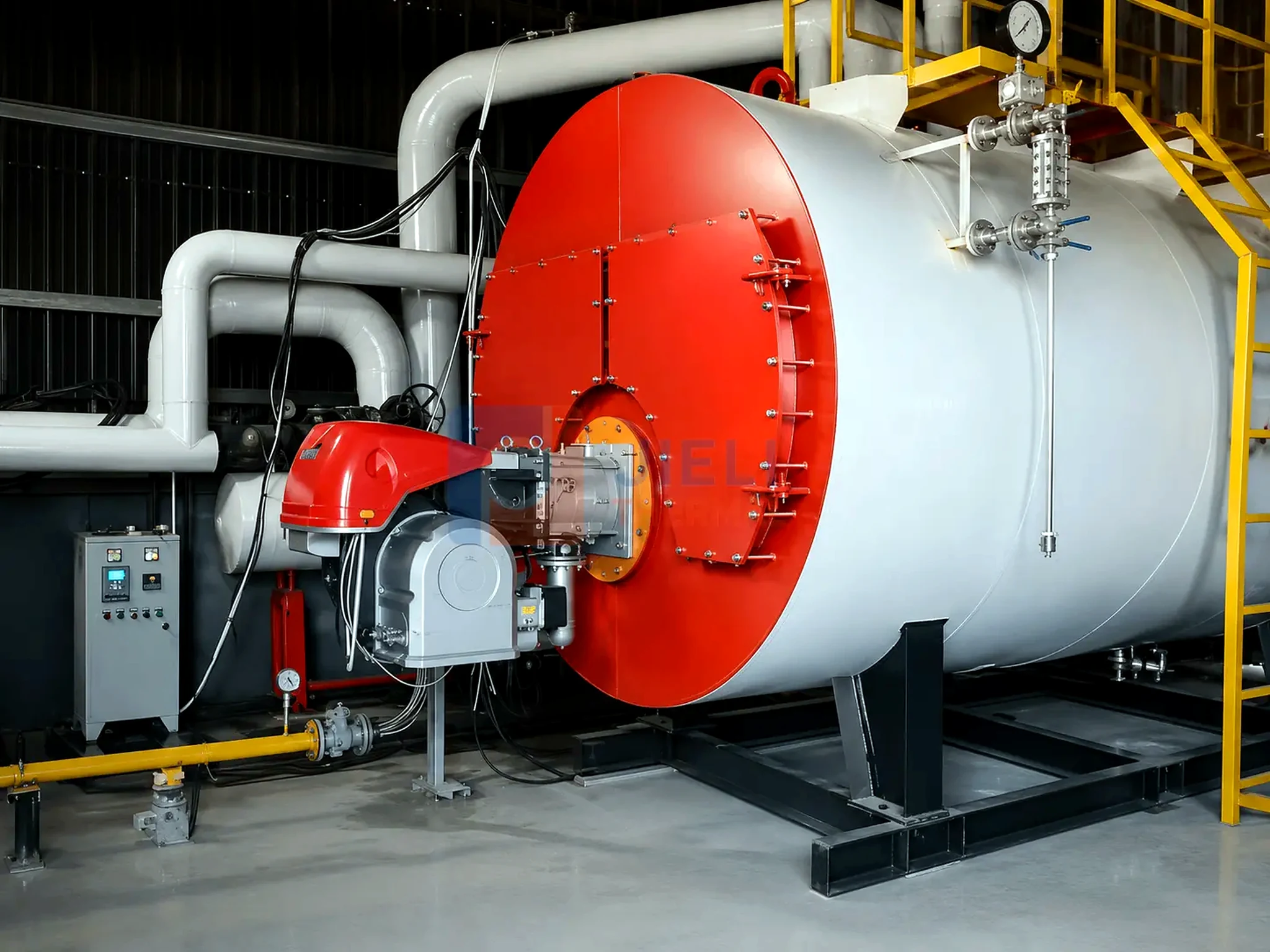
Compare the JIELI steam boiler capacity and fuel options against your textile production schedule. For gas and liquid fuel projects, review the gas / oil steam boiler range. Where a consistent biomass supply exists, review the biomass steam boiler system together with storage, feeding, draft, ash and particulate-control equipment.
4. Treat water and condensate as part of the boiler system
Raw-water analysis determines the treatment route. Feedwater temperature, dissolved gases, chemical control and blowdown affect reliability and fuel use. Ask suppliers to state the assumed feedwater condition and whether water treatment, feedwater tank, pumps, dosing and blowdown equipment are included.
Clean condensate retains treated water and useful heat. Map which textile processes can return uncontaminated condensate, at what temperature and pressure, and which streams must be isolated. The return percentage changes makeup water, treatment demand and boiler fuel consumption.
5. Select fuel, heat recovery and emissions equipment together
A gas-fired steam boiler may suit sites seeking automatic control and compact fuel handling. Liquid fuel requires the correct storage, pumping, heating or atomization arrangement. Biomass can change fuel cost and operating labor but adds fuel variability, storage, feeding, ash and flue-gas treatment.
Economizer duty depends on flue-gas conditions and feedwater temperature. Low-NOx, dust, sulfur or other emissions requirements must be confirmed from the destination and fuel before the burner and boiler proposal is finalized.
6. Compare complete steam-system boundaries
A useful quotation states whether it includes the boiler, burner or solid-fuel system, economizer, water treatment, feedwater tank and pumps, chimney, blowdown equipment, condensate interfaces, PLC/HMI, valves, instruments, drawings, packing, supervision and commissioning support.
| RFQ input | Why it matters |
|---|---|
| Normal / peak steam demand | Sets capacity, number of units and turndown requirement. |
| Pressure at each user | Defines boiler outlet and distribution strategy. |
| Water analysis and feedwater temperature | Determines treatment, blowdown and usable heat input. |
| Condensate return | Changes water, chemical and fuel demand. |
| Fuel and emissions limits | Determines combustion and flue-gas equipment. |
| Country, code and supply boundary | Defines documentation, inspection, scope and interfaces. |
Where stenters or heat-setting lines need high-temperature indirect heat, compare this steam duty with the existing textile thermal-oil application guide. One factory may need both utilities.
Frequently asked questions
Textile industry steam boiler FAQ
How is steam boiler capacity selected for a textile factory?
Build a time-based steam-demand schedule for dyeing, washing, finishing, humidification and other users. Confirm normal, minimum, peak and start-up demand, pressure, condensate return and future expansion instead of adding every nameplate at full load.
Which steam pressure is required for textile processing?
The required pressure depends on the process users and distribution losses. Define the pressure needed at each machine, then check the boiler outlet and any pressure-reducing stations. A single generic pressure cannot be assumed for every textile plant.
Can a textile plant use both steam and thermal oil?
Yes. Steam may serve dyeing, washing, humidification or other direct and indirect users, while thermal oil may serve stenters, heat-setting lines or high-temperature dryers. The choice should be made user by user.
What should a textile steam boiler quotation include?
State the boiler, burner or fuel system, water treatment, feedwater tank and pumps, economizer, condensate return, blowdown equipment, chimney, controls, valves, instruments, documentation and commissioning responsibilities required by the project.