


INDUSTRIAL EQUIPMENT PROCUREMENT
How to Choose a Steam Boiler Manufacturer: Technical and Commercial Checklist
Compare steam boiler manufacturers by code basis, real steam demand, fuel and emissions scope, water treatment, auxiliaries, inspection documents and total installed cost.
THE SHORT ANSWER
Compare the complete steam plant on one operating basis.
Define demand
- Normal, minimum and peak steam flow;
- Pressure, temperature and hourly profile;
- Feedwater, condensate and water quality.
Define delivery
- Boiler, fuel, water and control boundary;
- Code, inspection and document requirements;
- Site work, commissioning and service roles.
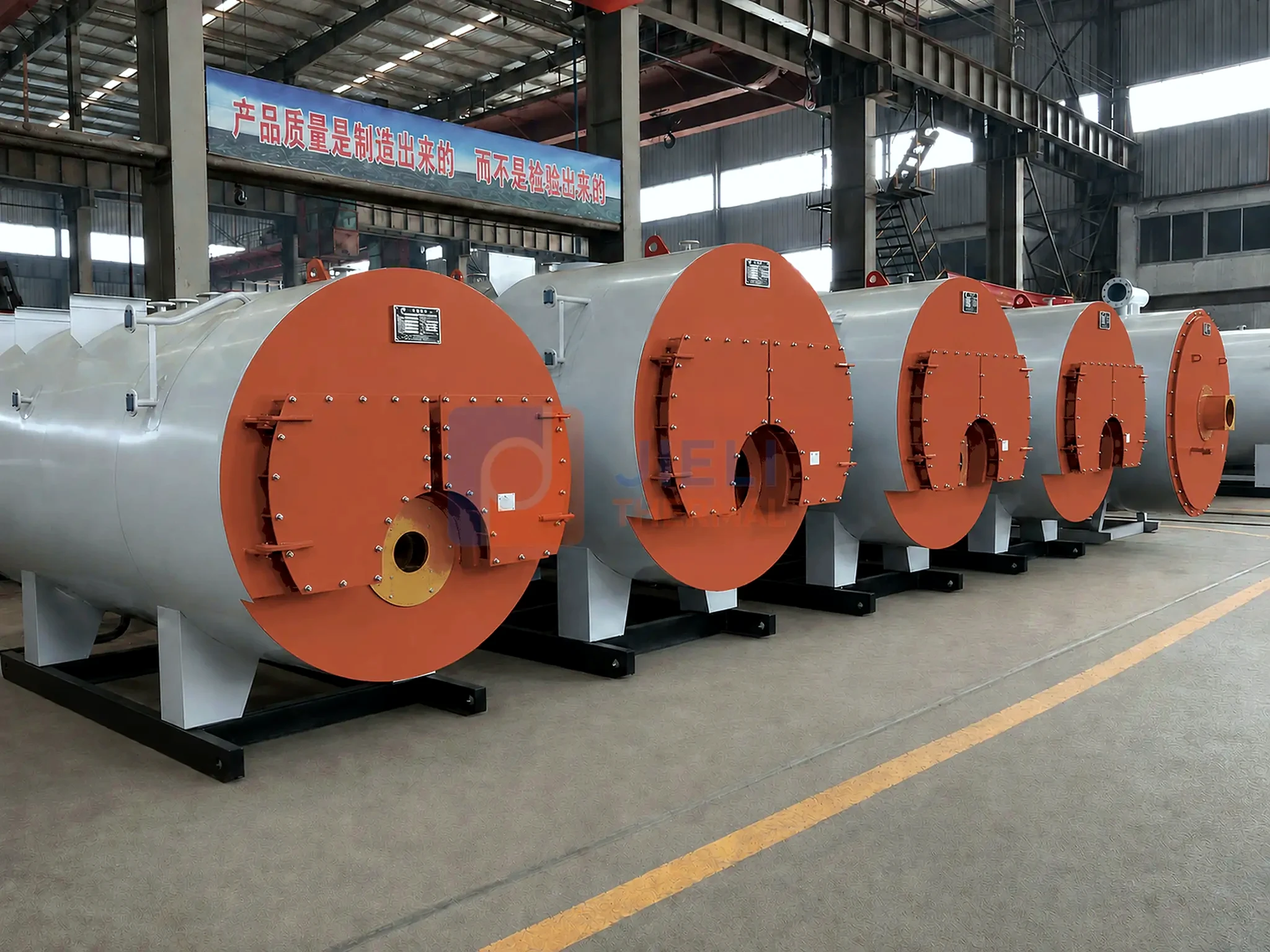
Confirm destination-country code, registration and inspection requirements. Compare the JIELI steam boiler manufacturing and project references and record the required supply scope in the RFQ checklist.
1. Does the manufacturer size from a time-based steam demand profile?
List each user’s normal and startup demand, operating hours and simultaneous use. Add justified losses and future allowance, then check minimum load to avoid excessive cycling.
Use the same demand schedule with every bidder. The steam boiler capacity calculation guide provides a practical framework.
2. Are steam pressure, temperature and burner turndown confirmed?
Specify saturated or superheated steam and the pressure required at the process, including distribution losses. Ask for the stable operating range and response to changing demand.
For gas, oil or dual-fuel units, define fuel pressure, composition or viscosity, burner modulation and fuel changeover requirements. For solid fuel, load response is linked to fuel feeding, grate, furnace and draft control.
3. Does the proposal include feedwater, treatment and condensate strategy?
Provide raw-water analysis, condensate return, temperature and contamination risk. Confirm treatment, deaeration, feedwater pumps, dosing and blowdown scope.
Do not compare boiler fuel consumption without the same feedwater temperature, condensate return and blowdown assumptions. Those conditions materially affect the heat balance.
4. Is combustion equipment matched to fuel and local emissions limits?
Provide gas or liquid-fuel properties and supply conditions, or representative biomass/coal analysis. Match fuel preparation, combustion and emissions equipment to that basis.
Assign responsibility for fans, economizer, dust collection, ash handling, emissions equipment and stack.
5. Is the quote for the pressure part or the complete steam plant?
Generate steam
Boiler, burner or fuel system, fans, economizer, controls, valves and instruments.
Support operation
Treatment, feedwater tank or deaeration, pumps, blowdown and condensate interfaces.
Complete delivery
Foundations, piping, chimney, power, erection, inspection, manuals and commissioning roles.
Use a responsibility matrix with inclusions, exclusions and connection points.
6. Which code, license, inspection and document requirements apply?
Confirm the proposed design/manufacturing code and local registration and inspection requirements. Verify that certificates cover the quoted equipment and required scope.
Agree the inspection plan and final document list before order: drawings, data sheets, material and welding records, NDE, pressure tests, electrical drawings and manuals as applicable.
7. Are efficiency, fuel consumption and price compared fairly?
Compare efficiency at the same load, fuel LHV/HHV basis, steam condition, feedwater temperature, blowdown and heat-recovery scope. State auxiliary electricity separately.
| Comparison area | Normalize before deciding |
|---|---|
| Performance | Steam output and condition, feedwater temperature, fuel basis, load point, blowdown and heat recovery. |
| Capital scope | Boiler island, water system, chimney, controls, freight, erection and local compliance work. |
| Operating cost | Fuel, electricity, water, chemicals, blowdown heat, maintenance and expected condensate return. |
| Commercial risk | Delivery definition, documentation, inspection, commissioning, spares and warranty interfaces. |
8. Are shipment, installation and after-sales interfaces written down?
Confirm shipping dimensions, split, lifting, preservation and loose items. Obtain foundation, layout and utility drawings before delivery.
Define site readiness, commissioning, operator training, acceptance tests, spares and service responsibilities.
9. Steam boiler RFQ checklist
Send the same minimum data set to each steam boiler manufacturer.
- Normal, minimum and peak steam demand by time period, operating hours and start-up conditions.
- Required steam pressure and temperature at the process, distribution distance and expected losses.
- Raw-water analysis, feedwater temperature, condensate return percentage and contamination risks.
- Fuel specification, availability, pressure or preparation, backup-fuel need and local emissions limits.
- Country, altitude, ambient conditions, power supply, applicable code and boiler-room constraints.
- Required auxiliaries, inspection and document list, delivery term, erection and commissioning scope.
Identify unknown inputs and their confirmation dates.
Download the checklist and compare actual model data
Use the fillable steam-boiler RFQ checklist (English PDF) or WNS / DZL model data and project-input workbook (English / Spanish Excel). Mark unknown values explicitly.
Use the WNS worksheet alongside the gas/oil steam boiler parameters, or the DZL worksheet alongside the biomass steam boiler parameters. For a documented supply example, review the Argentina WNS12-1.25, 12 t/h gas steam boiler project. A past delivery is evidence of that supply, not automatic approval for another country or operating duty.
Discuss your steam-boiler requirements with Chris on WhatsApp. Provide the country, application, output, pressure and fuel.
FREQUENTLY ASKED QUESTIONS
Questions buyers ask before placing an order
What information does a steam boiler manufacturer need for an accurate proposal?
Provide normal, minimum and peak steam demand, pressure and temperature, hourly load profile, feedwater and condensate conditions, fuel specification, emissions requirements, site data, power supply and required supply boundary.
How should boiler efficiency quotations be compared?
Use the same fuel heating-value basis, load point, feedwater temperature, blowdown assumption, excess-air or flue-gas conditions and included heat-recovery equipment. Also identify whether auxiliary electrical consumption is included.
Why are water treatment and condensate return part of boiler selection?
Feedwater quality affects scale, corrosion, blowdown and reliability. Condensate return affects water and fuel consumption. The boiler, deaeration or feedwater system, treatment and condensate strategy should therefore be reviewed together.
What is included in a complete steam boiler system?
Scope may include boiler, burner or fuel feeding, fans, economizer, chimney, water treatment, feedwater tank and pumps, blowdown equipment, controls, valves, instruments and project documentation. Every quotation should identify included items and battery limits.
Should I choose boiler capacity only from the total connected equipment load?
No. Build a time-based demand profile, account for coincidence, start-up, losses and future margin, and check minimum load and burner turndown. Arbitrary oversizing can increase cycling and reduce operating efficiency.
PREPARE A COMPARABLE RFQ
Send the same project data to every shortlisted supplier.
JIELI THERMAL can review your duty, fuel, site conditions and intended supply boundary. Any preliminary recommendation remains subject to confirmed project data and applicable local requirements.
Request a technical proposal