


INDUSTRIAL HEATING SYSTEM SELECTION
Thermal Oil Heater vs Steam Boiler: A Practical Industrial Selection Guide
Use thermal oil for suitable indirect heating duties. Use steam where condensation or steam itself serves the process. Compare temperature, distribution and operating requirements.
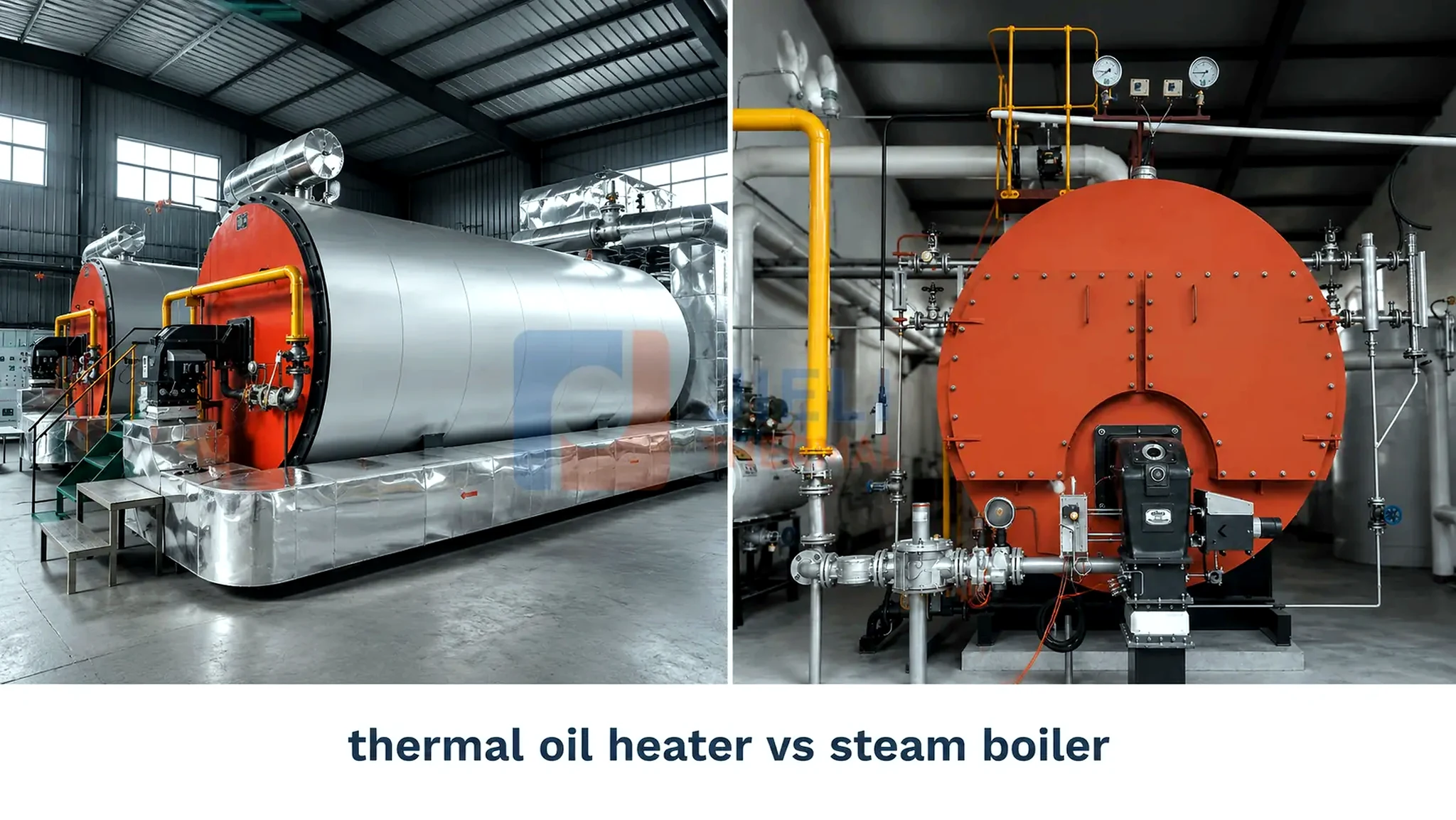
THE SHORT ANSWER
Choose the medium the process needs.
Start with a thermal oil heater when…
- The process needs indirect heat, not steam.
- Stable high-temperature operation and close temperature control are important.
- Reactors, dryers, hot presses, rollers, asphalt tanks or similar users require a circulating liquid heat source.
Start with a steam boiler when…
- Steam is required for direct injection, humidification, sterilization, cooking or cleaning.
- The factory already has a practical steam and condensate network.
- Condensing steam is the preferred heat-transfer method at multiple process users.
Confirm the equipment and safeguards for the selected fluid, process and site.
01 · THERMAL FLUID HEATING
What is a thermal oil heater?
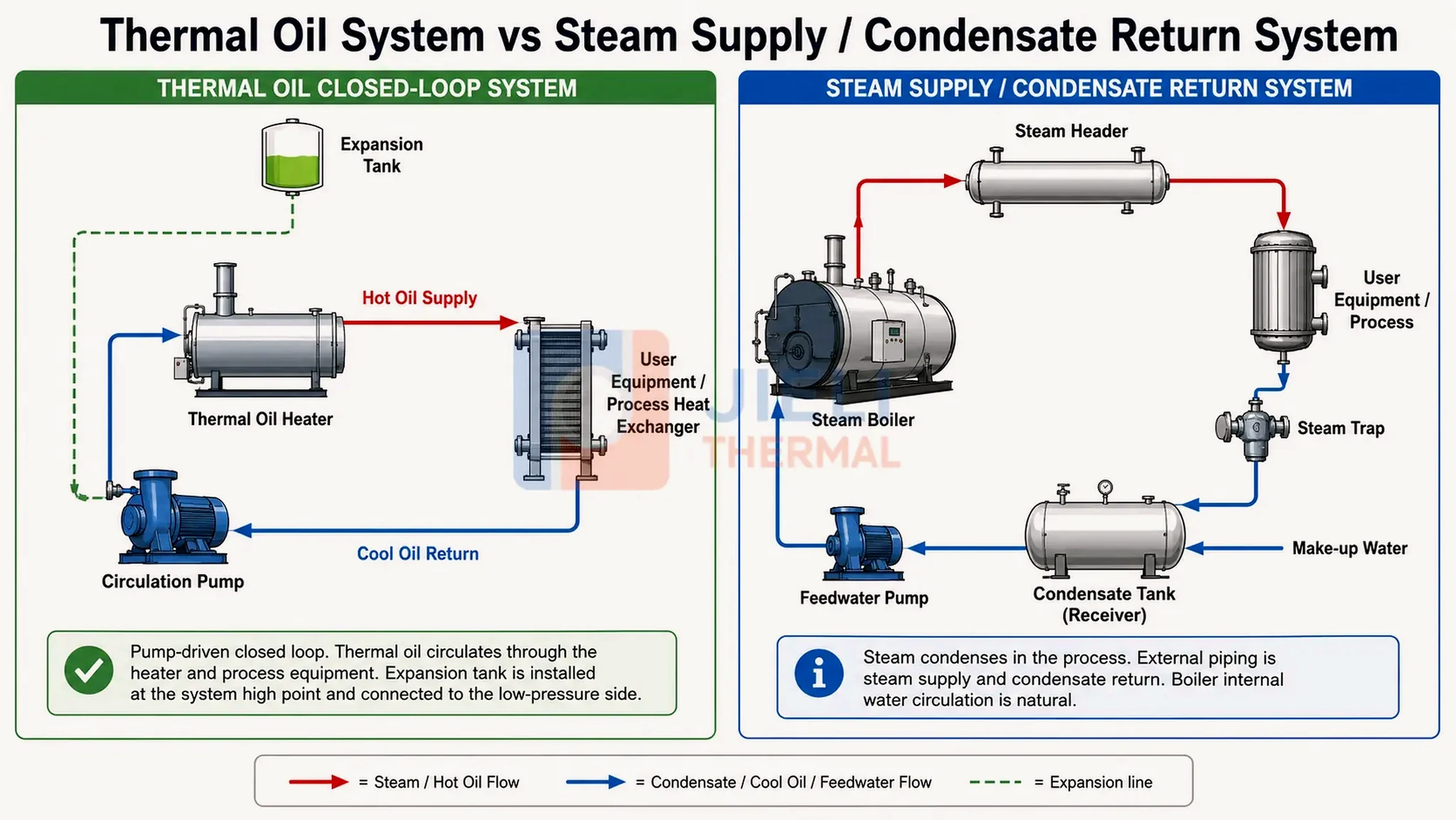
A thermal oil heater, or thermal fluid/thermic fluid heater, adds heat to fluid circulating through process users and back to the heater. In the systems discussed here, the fluid remains liquid.
Users include reactor jackets, dryers, calender rolls, presses and tank coils. Control combines heater output, circulation and user valves.
Where thermal oil heating is commonly used
A gas fired thermal oil heater provides modulating heat input. Solid-fuel and biomass systems may suit available residues and site conditions. Applications include:
- Asphalt, bitumen and tank-farm heating;
- Plywood, MDF and wood-panel hot-press systems;
- Chemical reactors, polymerization and resin processing;
- Textile heat setting, coating and finishing;
- Rubber, plastics and composite-material processing;
- Industrial dryers, ovens and heat-treatment lines.
Critical thermal-oil design points
Check these five parts of the thermal-oil loop:
- Fluid selection: bulk operating temperature, maximum film temperature, oxidation resistance and fluid supplier limits must align.
- Circulation: adequate flow through the coil helps maintain turbulent heat transfer and avoids excessive tube-wall and film temperatures.
- Expansion and venting: the expansion tank, elevation, inert-gas arrangement where used, overflow and filling system require coordinated design.
- Controls and interlocks: low flow, high temperature, burner permissives, pump status and emergency shutdown logic must work as one protection system.
- Fluid condition: periodic analysis can identify oxidation, thermal cracking, contamination or viscosity changes before they become operating problems.
Thermal oil is not “pressureless.” Check pump pressure, static head, vapor pressure, expansion and component ratings even where steam saturation pressure is avoided.
02 · INDUSTRIAL STEAM
What is an industrial steam boiler?
A steam boiler heats treated feedwater to generate steam. Condensing steam transfers latent heat to users; clean condensate can return to the feedwater system.
Saturated-steam temperature depends on pressure. Specify superheat separately where required.
Where steam is normally the better process medium
A gas fired steam boiler provides a packaged steam source. Biomass and coal-fired steam systems also require fuel, ash and emissions systems. Uses include:
- Food cooking, blanching and direct steam injection;
- Textile dyeing, washing, finishing and humidification;
- Pharmaceutical sterilization and clean-process duties;
- Paper, corrugated packaging and process drying;
- Animal feed conditioning and pelleting;
- Plant-wide utility heating with many distributed users.
Critical steam-system design points
- Water treatment: raw-water quality, softening or demineralization, deaeration, chemical control and monitoring influence scale, corrosion and boiler life.
- Blowdown and heat recovery: blowdown is necessary to control dissolved solids, but excessive blowdown wastes water and energy. Heat recovery should be evaluated where practical.
- Distribution: pipe sizing, insulation, drainage, separators and pressure reduction affect steam quality at the user.
- Steam traps: the trap arrangement must remove condensate and non-condensable gases without allowing useful steam to escape.
- Condensate return: returning hot, clean condensate can reduce make-up water, treatment chemicals and the energy required to heat feedwater.
03 · SIDE-BY-SIDE
Thermal oil heater vs steam boiler: engineering comparison
| Selection factor | Thermal oil heater | Steam boiler |
|---|---|---|
| Heat-transfer principle | Sensible heat carried by circulating liquid | Latent heat released as steam condenses |
| Best starting point | Stable, indirect process heating | Processes that require steam as a utility or medium |
| Temperature and pressure | High liquid-phase temperatures are possible without steam saturation pressure, subject to fluid and system limits | Saturated-steam temperature rises with steam pressure |
| Distribution | Pump-driven supply and return loop | Steam supply with condensate drainage and return |
| Primary operating focus | Flow, film temperature, fluid condition and expansion management | Water chemistry, blowdown, steam quality, traps and condensate return |
| Direct process contact | Normally no | Possible when process and steam quality allow |
| Freeze / shutdown considerations | Fluid viscosity, cold-start procedure and low-point drainage require review | Condensate drainage, vacuum formation and freeze protection require review |
| Typical lifecycle risks | Fluid degradation, leakage, coking and inadequate flow | Scale, corrosion, water hammer, trap failure and steam loss |
Which one is more efficient?
Compare useful heat delivered over the annual load profile. Include stack and distribution losses, blowdown, condensate return, auxiliary power, standby and heat recovery.
Use the same process duty and cost boundary for both alternatives.
Does fuel type decide the heat-transfer medium?
Fuel determines combustion, handling and emissions equipment. It does not by itself determine whether the process needs oil or steam.
04 · SELECTION WORKFLOW
How to select the correct industrial heating system
- Define the process duty.List every user, required temperature or pressure, heat load, operating hours, startup demand and simultaneous-use factor.
- Ask whether steam itself is necessary.If direct injection, sterilization, humidification or an existing steam utility is essential, steam normally remains the starting point. If only indirect heat is needed, thermal oil deserves evaluation.
- Map the full distribution system.Include pipe length, elevation, user control, return conditions, heat exchangers, pumps, traps, tanks and the space available for auxiliaries.
- Evaluate fuel and emissions constraints.Confirm fuel composition, supply pressure, storage, permitted emissions, dust collection, ash disposal and local operator capability.
- Compare lifecycle requirements.Review water treatment, fluid testing, spare parts, inspection, operator training, electricity use, planned shutdowns and heat-recovery opportunities.
- Confirm the governing standards.National regulations and project specifications determine the final code path. Where required, applicable ASME or CE/PED engineering and documentation scope should be defined before manufacture.
Information to send a boiler-system engineer
- Product and industry process description;
- Heat load or steam capacity and load profile;
- Required thermal-oil temperature or steam pressure;
- Fuel type, analysis, supply pressure and local cost;
- Water quality and available electrical power;
- Site altitude, ambient conditions and installation space;
- Required emissions limits and applicable standards;
- New installation, expansion or replacement scope.
05 · APPLICATION EXAMPLES
Two different processes, two different system choices
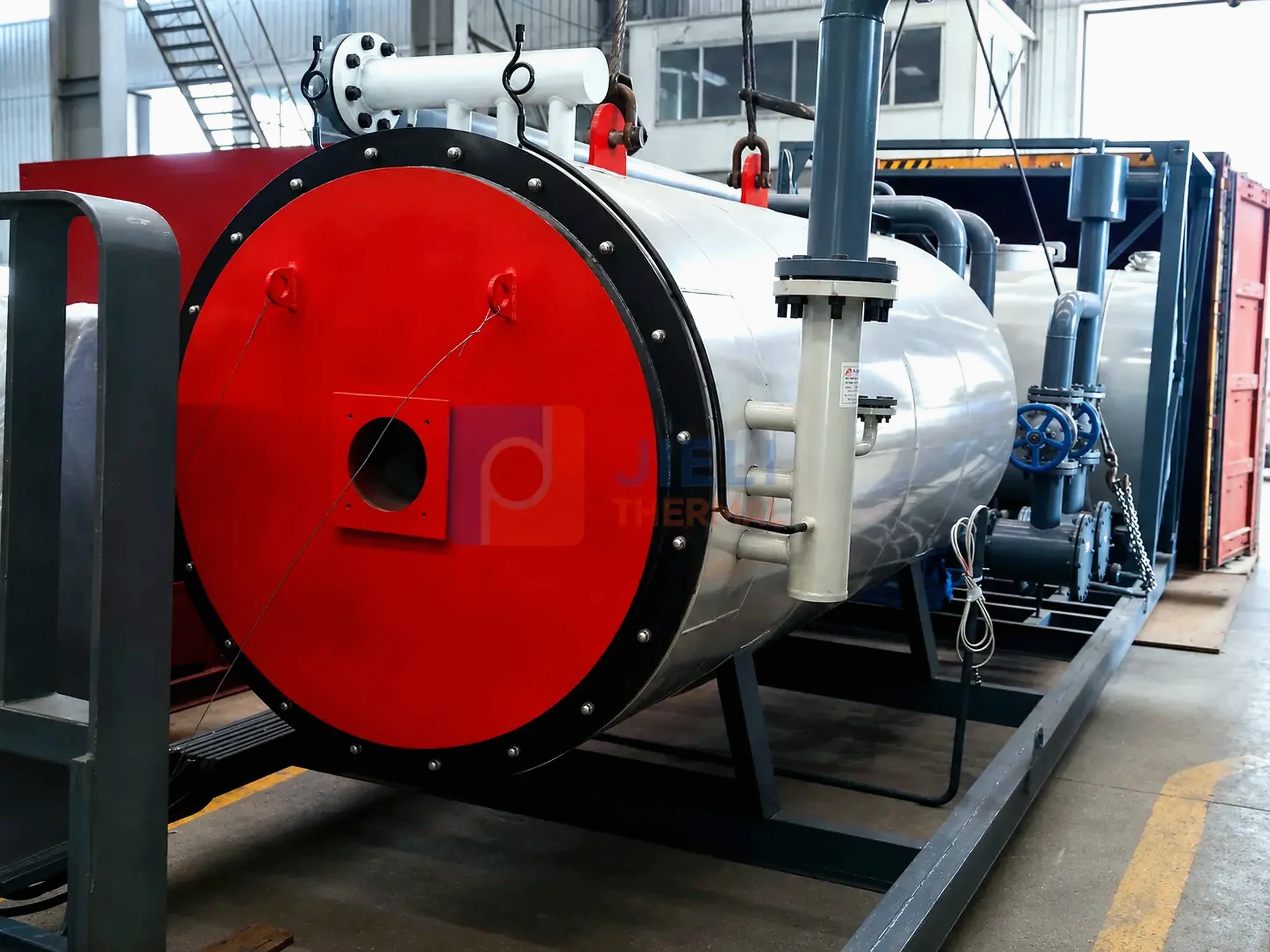
Asphalt heating: stable indirect high-temperature heat
Thermal oil provides indirect heat to asphalt tanks, piping and process equipment.
Check tank-coil duty, branch balance, circulation and low-flow protection.
Explore gas-fired thermal oil heaters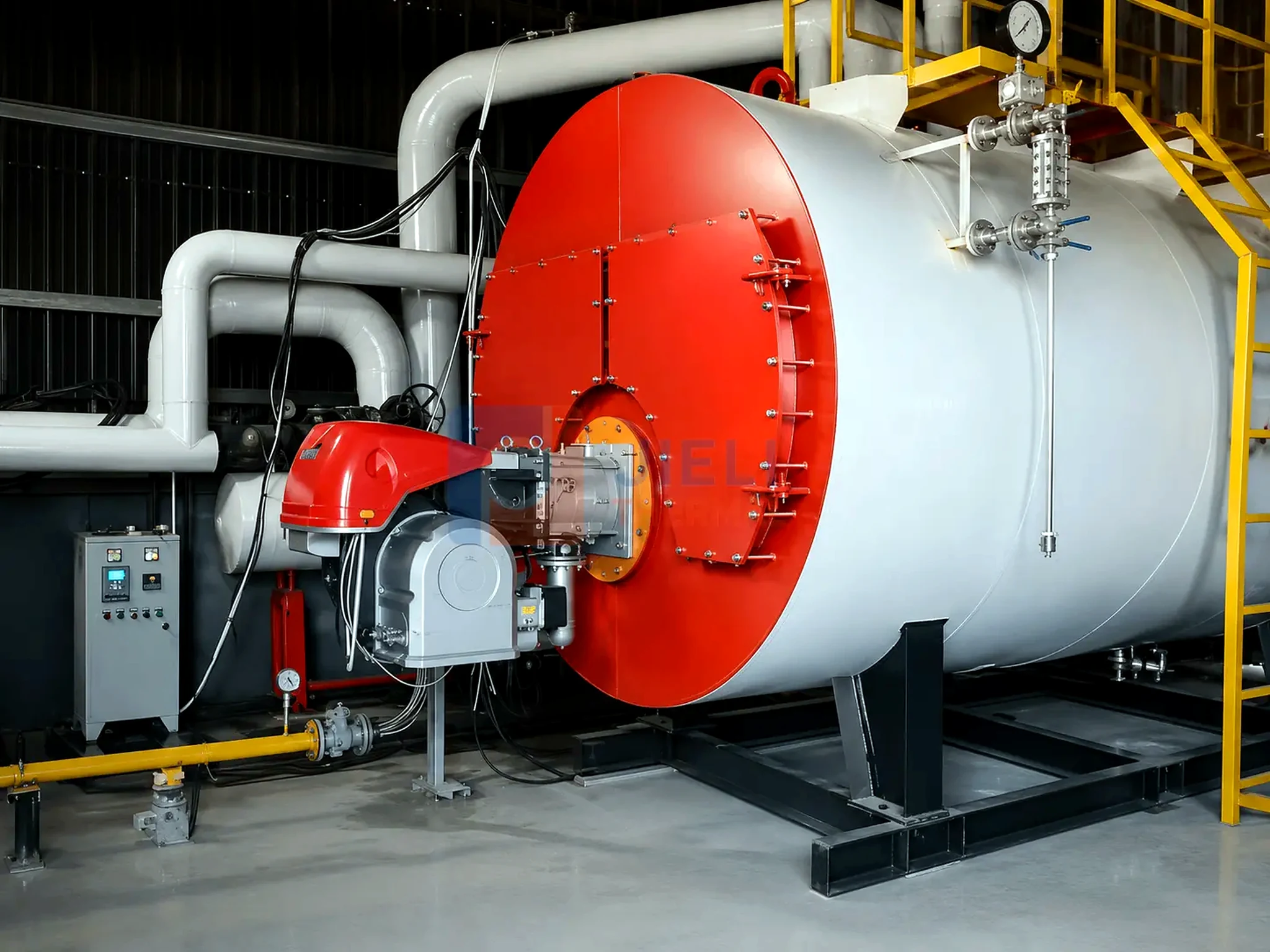
Textile production: steam as a plant utility
Textile dyeing and finishing use steam for heating, washing, drying and utilities. Include water treatment and condensate return.
Use the measured machine schedule to select boiler staging and burner turndown.
Explore gas-fired steam boilers06 · MANUFACTURING & SYSTEM SCOPE
Why system engineering matters after equipment selection
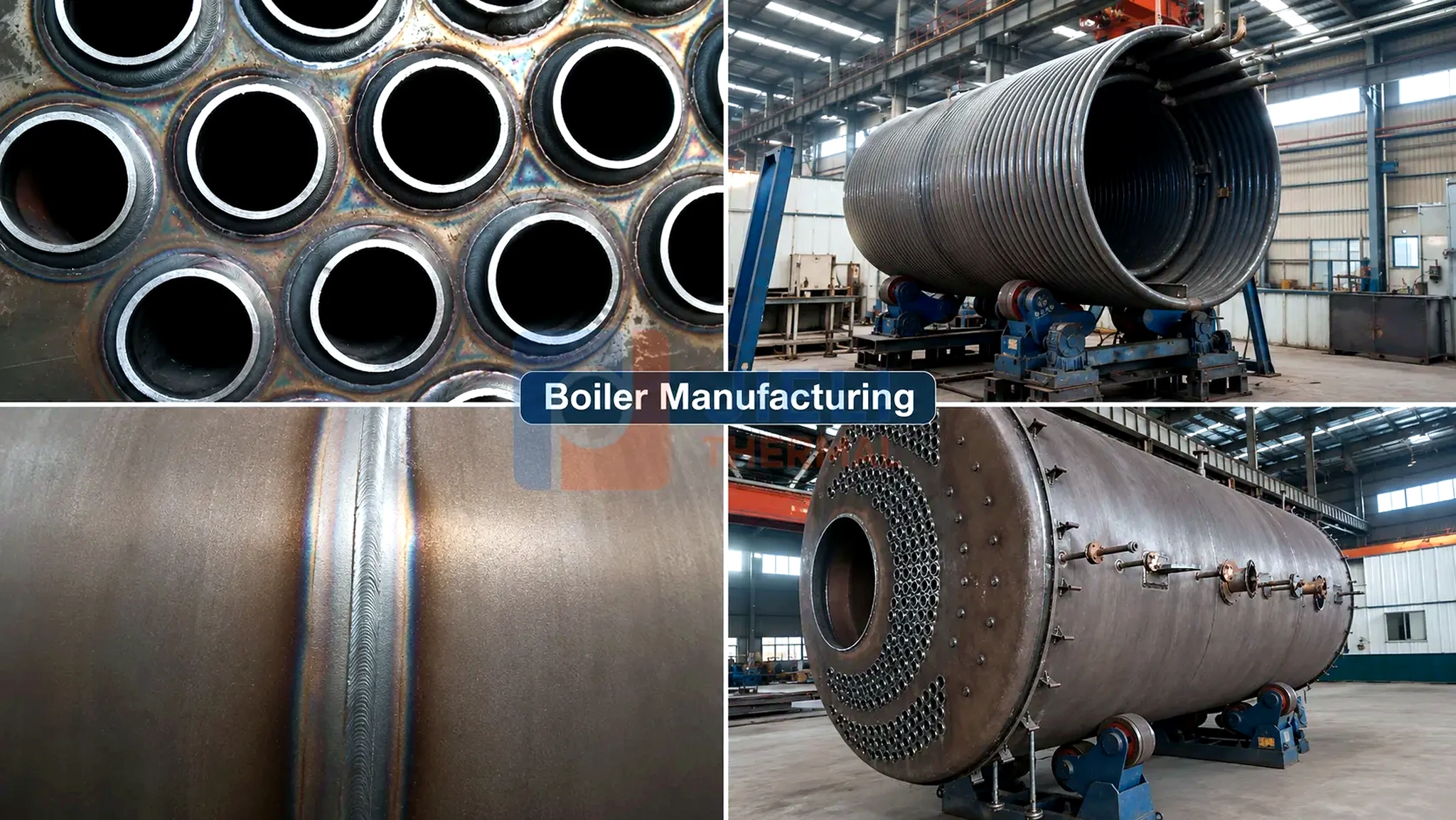
For a thermal oil heater or steam boiler from China, define combustion, pumps/feedwater, controls, documents, shipping and commissioning scope before order.
JIELI THERMAL designs and manufactures thermal oil heaters, steam boilers and coordinated auxiliary systems in Linyi, China. Our engineering approach starts with real process conditions and gives priority to safety redundancy, operating reliability, maintainability and automatic control.
FREQUENTLY ASKED QUESTIONS
Thermal oil and steam selection questions
What is the main difference between a thermal oil heater and a steam boiler?
A thermal oil heater circulates a liquid heat-transfer fluid through a pump-driven loop and is normally used for indirect process heating. A steam boiler converts water into steam, which distributes energy and releases latent heat as it condenses at the process user.
Is a thermal oil heater pressureless?
No. A liquid-phase thermal oil system may operate without steam-generation pressure, but it is still an engineered pressure system. Pump differential pressure, static head, fluid vapor pressure, expansion behavior and the pressure ratings of equipment and piping must all be considered.
Which system is better for high-temperature indirect heating?
A properly designed thermal oil heater is often the practical choice when the process needs stable, high-temperature indirect heat but does not require steam. Final selection still depends on the heat-transfer fluid, film temperature, circulation rate, process load and applicable regulations.
When should a factory choose a steam boiler?
Steam is usually preferred when steam itself is required for direct injection, humidification, sterilization, cleaning, cooking, process reactions or a plant-wide utility network. It is also effective where condensation at the user provides useful, repeatable heat transfer.
Can one factory use both thermal oil and steam?
Yes. Some plants use thermal oil for high-temperature indirect users and steam for lower-temperature utilities or direct process requirements. A combined system should be evaluated as one plant so that fuel use, heat recovery, controls and operating priorities are coordinated.
What information is needed for an initial boiler-system selection?
Provide the required heat load or steam capacity, operating temperature or steam pressure, fuel, process description, load profile, installation location, emissions requirements, water quality, available utilities and the standards required for the project.
THE ENGINEERING TAKEAWAY
Select the process system—not only the boiler body.
Choose a thermal oil heater when the factory needs controlled, indirect process heat and the complete circulation loop can be engineered and maintained correctly. Choose a steam boiler when steam itself provides real process value and the feedwater, distribution, trapping and condensate systems are part of the project scope.
If both options appear possible, compare them against the same operating profile and the same lifecycle boundary. That is the dependable way to select an industrial heating system.
Discuss Your Heating RequirementTechnical references
The engineering review for this guide used the following authoritative resources. Project design must still follow the current codes and regulations applicable to the installation.