


PROJECT PLANNING GUIDE
What Industrial Boiler Field Cases Show Buyers
Use field cases to check scale, equipment scope, layout, transport and maintenance access.
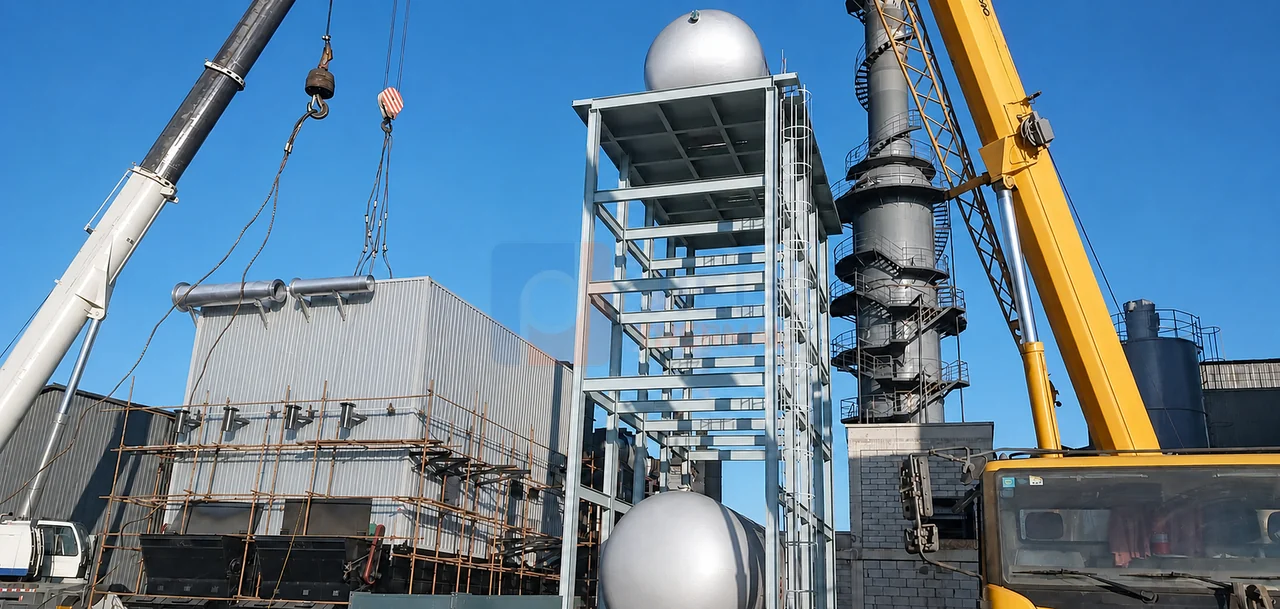
THE PRACTICAL VALUE
Use project images to verify questions, not to copy a design.
A relevant case shows supplied equipment and site integration. Request operating records separately to assess performance.
01 · CAPACITY & SCALE
Translate the nameplate duty into real site requirements.
Compare capacity in consistent units, then check foundations, module weight, lifting, access and auxiliaries. A photograph shows physical scale but cannot establish duty or performance.
02 · FUEL SYSTEM
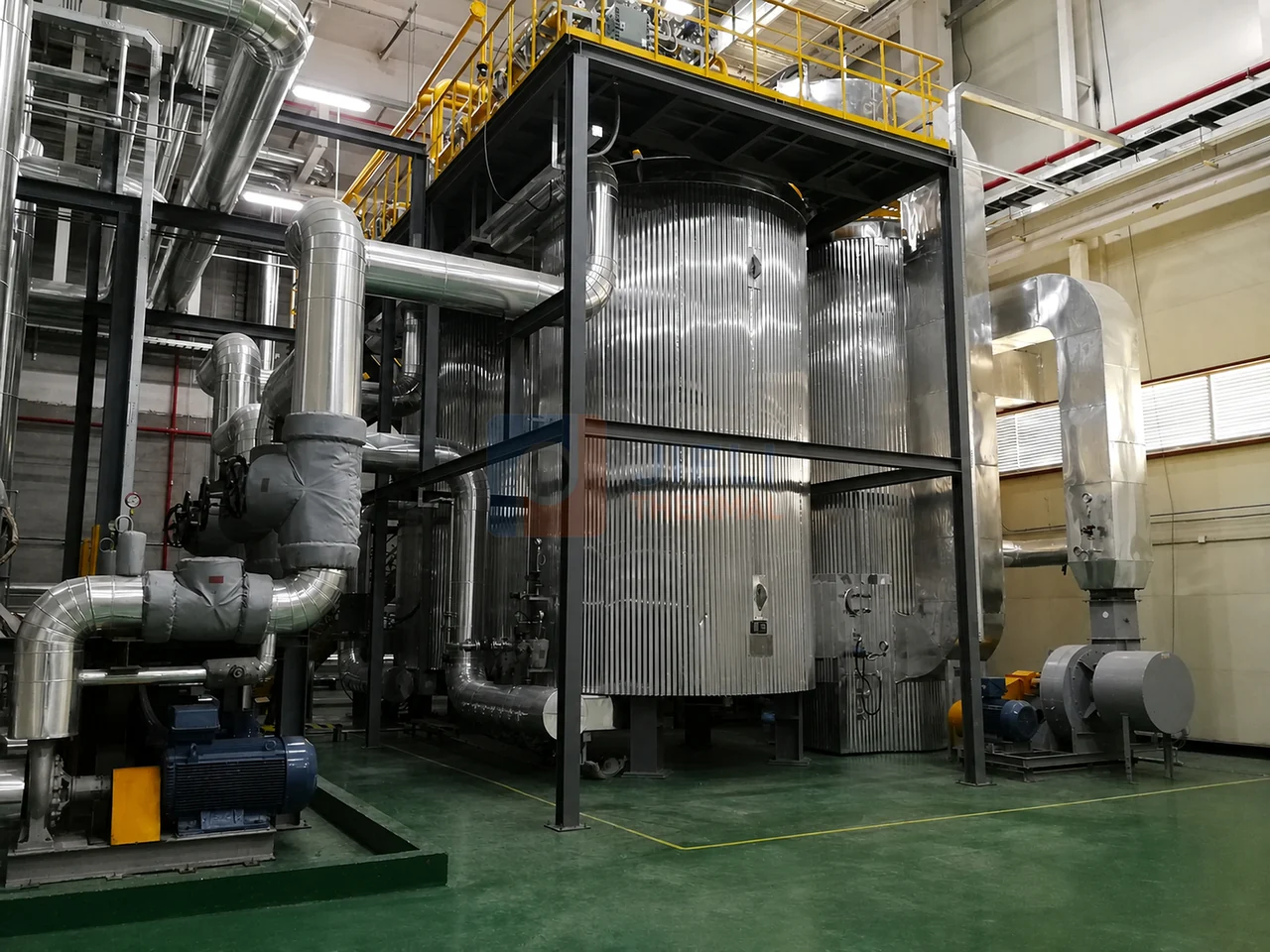
Solid fuel changes the complete plant.
For biomass or coal, follow the full fuel path: storage, feeding, furnace, draft, dust and ash removal. Ask which equipment handled the documented fuel.
03 · PIPING & CIRCULATION
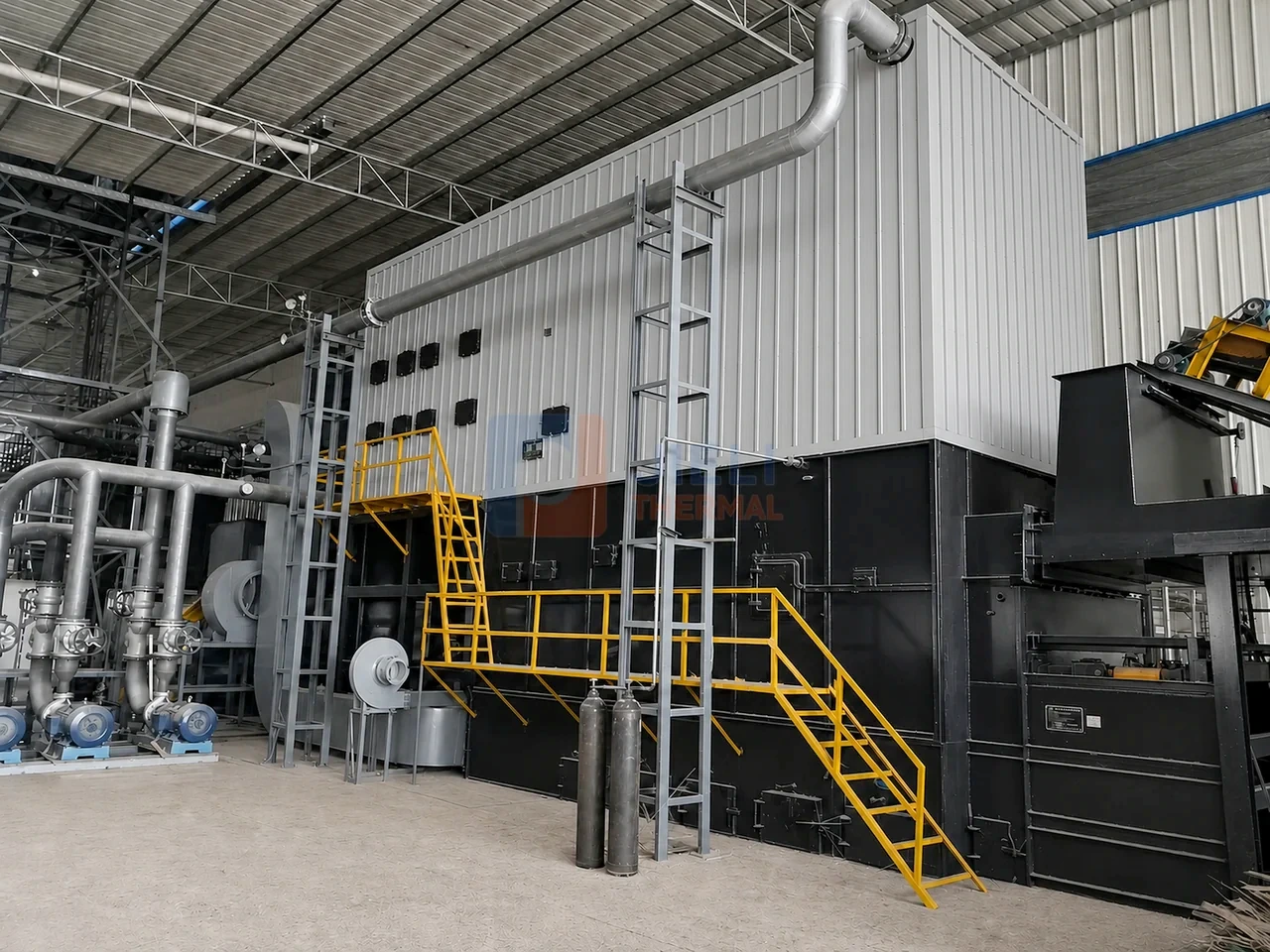
Review the loop, not only the heater.
Thermal-fluid systems depend on reliable circulation through the heater and every process user. Field images can show pump placement, valve access, pipe support, insulation and the route between equipment levels. They cannot prove hydraulic adequacy; request the design flow, pressure-drop model, pump duty and low-flow protection logic.
04 · ACCESS & LAYOUT
Leave space to operate and maintain the system.
Platforms, stairs, doors, soot-cleaning access, tube inspection zones and removal paths should be visible in the layout. Check how operators reach instruments and valves, how ash or fuel moves through the area and whether major components can be serviced without dismantling unrelated equipment.
05 · TRANSPORT & LIFTING
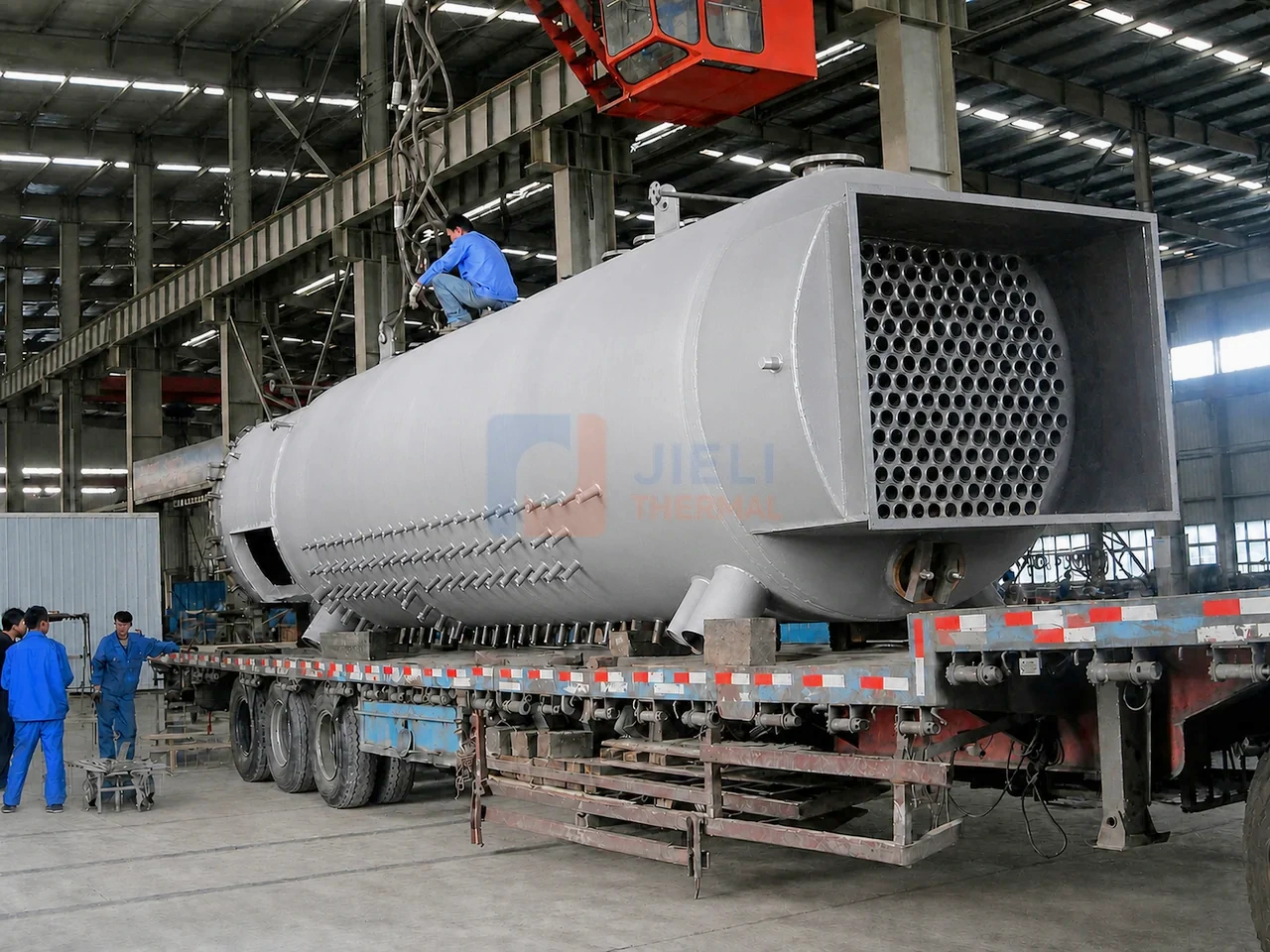
Plan delivery around the largest module.
Confirm shipping dimensions, mass, center of gravity, lifting points, route restrictions, crane access and the division between factory assembly and field assembly. The transport photograph of a large boiler is useful evidence of scale, but a project lifting plan must be prepared for the actual site.
06 · BUYER CHECKLIST
Turn the images into specific engineering questions.
- Which reference has the closest duty, fuel and operating temperature or pressure?
- What was included in the supplier's scope and what was completed locally?
- How were circulation, expansion, combustion, draft and emissions equipment selected?
- Which code, inspection and documentation requirements applied?
- How were transport dimensions, module weights and lifting interfaces controlled?
- What commissioning, training and spare-parts support was supplied?
For project comparison, start with the complete field-case gallery, then review the relevant thermal oil heater or industrial steam boiler family.