

THERMAL OIL HEATER MODEL CODES
YYW vs YYL vs YLW vs YGL Thermal Oil Heater Guide
YYW, YYL, YLW and YGL indicate thermal oil heater families. Confirm the exact fuel, layout, duty and model definition on the supplier data sheet.
QUICK ANSWER
Treat the code as a family label, not a complete specification.
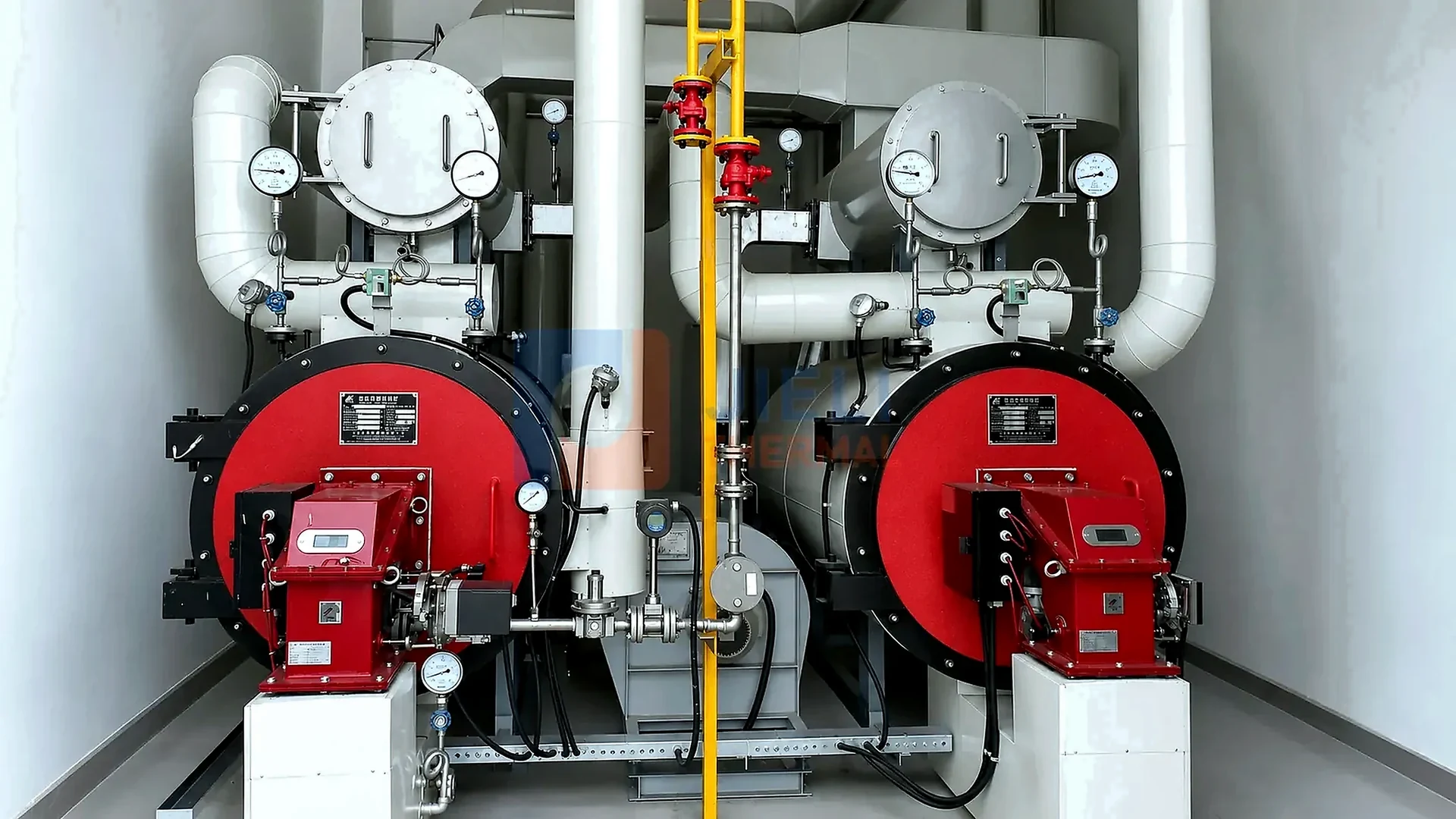
YYW / YYL
Commonly associated with gas- or liquid-fuel thermal oil heaters, with horizontal or vertical layout conventions depending on the supplier and standard used.
YLW
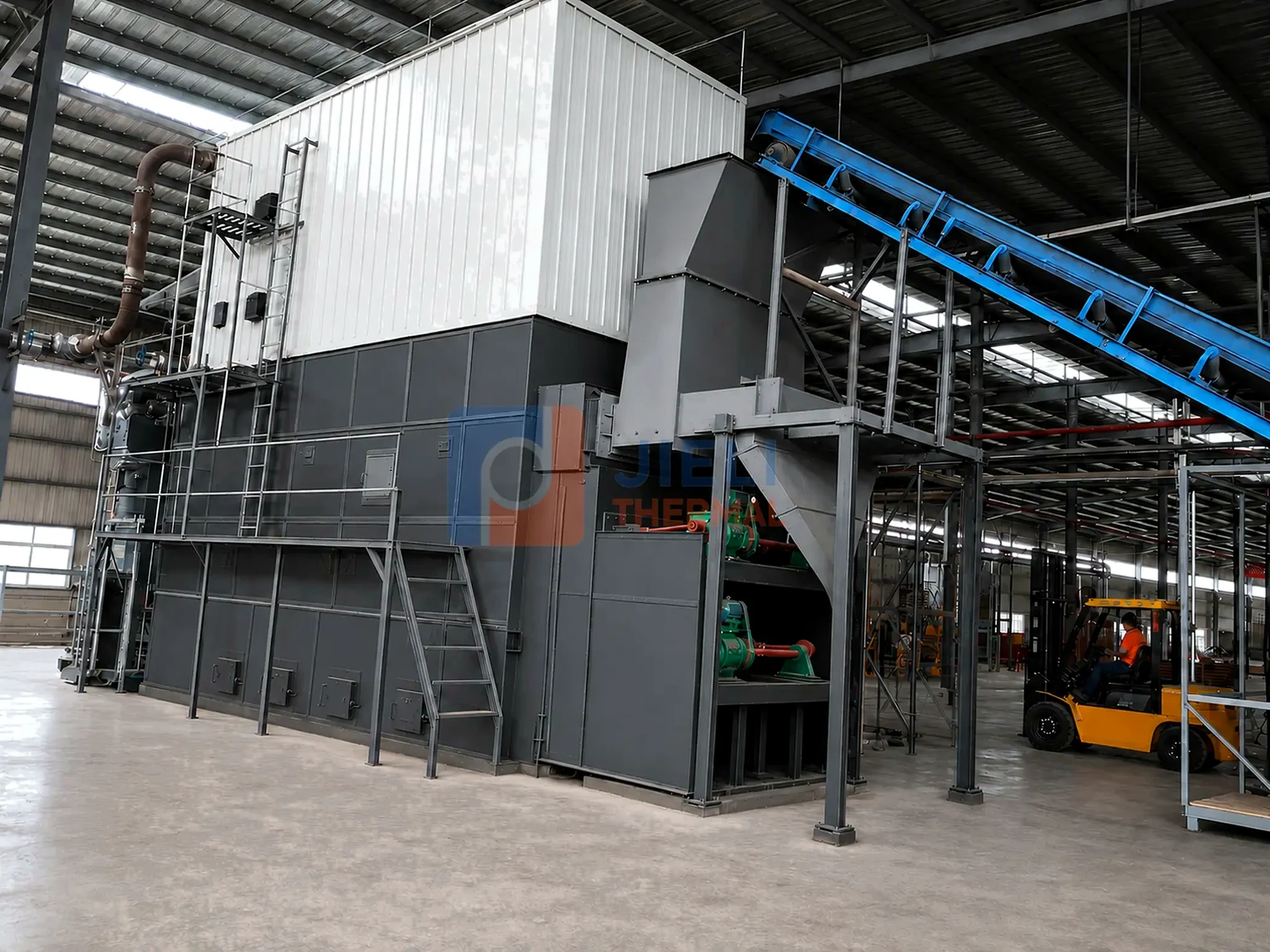
Commonly associated with horizontal solid-fuel systems using a travelling or chain-grate combustion arrangement.
YGL
Commonly associated with a vertical solid-fuel organic heat-carrier heater, often applied to biomass or coal projects.
Procurement rule: the signed data sheet, general arrangement drawing, fuel specification and scope list control the project—not an assumed meaning of the model letters.
01 · TERMINOLOGY
Model letters shorten communication, but conventions can differ.
Chinese quotations commonly use YYW, YYL, YLW, YGL or YY(Q)L. Capacity units and supplied equipment must be stated alongside the code.
Confirm fuel, orientation, combustion method, useful output, temperature, pressure and included equipment.
02 · MODEL-FAMILY SCREENING
Use this table to route the enquiry to the right engineering discussion.
| Model family | Common market association | Items that still require confirmation |
|---|---|---|
| YYW | Horizontal gas- or liquid-fuel thermal oil heater | Fuel, coil arrangement, burner, duty, fluid flow and pressure drop |
| YYL / YY(Q)L | Vertical gas- or liquid-fuel thermal oil heater; “Q” is often used when gas firing is identified | Exact layout, model capacity basis, burner and complete thermal-oil system |
| YLW | Horizontal solid-fuel heater, frequently with chain or travelling grate | Fuel analysis, grate, furnace, draft, ash and emissions equipment |
| YGL | Vertical fixed-grate or compact solid-fuel organic heat-carrier heater | Fuel size and moisture, feeding method, operating range and emissions scope |
These descriptions are procurement guidance, not a universal legal decoding rule. Verify the manufacturer’s model definition on every project.
03 · GAS AND LIQUID FUEL
YYW and YYL selection starts with duty, temperature and burner data.
For gas/oil heaters, specify duty, oil temperatures, fluid properties, fuel conditions and turndown. Choose horizontal or vertical layout from plot, transport and maintenance requirements.
Use the 2–12 million kcal/h gas-fired thermal oil heater selection guide and confirm circulation against the selected fluid and duty.
04 · BIOMASS AND COAL
YLW and YGL are combustion-system decisions, not only heater-body decisions.
Specify solid-fuel moisture, size, ash, heating value and variation. Match storage, feeding, furnace, grate, fans, dust and ash equipment to that analysis.
YLW commonly denotes horizontal chain/travelling-grate arrangements; YGL commonly denotes vertical fixed-grate arrangements. Confirm the actual construction.
05 · DUTY AND TEMPERATURE
Convert model capacity into one consistent engineering basis.
Convert all capacities to one unit and distinguish useful heat from fuel input. 1,000,000 kcal/h ≈ 1.163 MW. Fuel input equals useful duty divided by efficiency on the stated basis.
Check flow, coil velocity, pressure loss and film temperature as well as heat capacity.
PUBLISHED JIELI DATA
The model tables show why the code and hydraulic data must be read together.
| Published JIELI family | Rated capacity range | Published circulation range | Published main-pipe range |
|---|---|---|---|
| YY(Q)L vertical gas / fuel-oil-fired | 2,000,000–12,000,000 kcal/h | 160–600 m³/h | 200–400 mm |
| YLW horizontal biomass-fired | 1,200,000–20,000,000 kcal/h | 100–1,350 m³/h | 150–600 mm |
These are the ranges currently published in JIELI’s preliminary product tables, not guaranteed values for an unconfirmed project. A buyer should use the model code to find the appropriate family, then verify the exact row against the selected fluid, temperature difference, coil pressure drop, fuel and site conditions.
The JIELI project archive includes gas-fired references from 1,000,000 kcal/h in the United States to 10,000,000 kcal/h in Saudi Arabia, and biomass references of 3,000,000 kcal/h in Chile and 6,000,000 kcal/h in Argentina.
06 · SYSTEM BOUNDARY
Compare the heater island and the thermal-oil loop together.
| System area | Typical items to define |
|---|---|
| Heater and combustion | Coils, casing, burner or grate, fuel train or feeding, fans, controls and heat recovery |
| Thermal-oil circuit | Circulation pumps, expansion tank, low tank, separator, filters, valves and instruments |
| Flue gas and emissions | Air preheater or economizer, dust collector, induced-draft fan, duct and chimney |
| Site interfaces | Foundations, piping, cabling, insulation, erection, commissioning and documentation |
Request a written battery-limit drawing. Two quotes carrying the same model letters may include very different plant boundaries.
Model-neutral thermal oil heater RFQ checklist
- Normal and peak useful heat duty in kW or MW;
- Thermal-fluid brand or property table and maximum recommended temperatures;
- Supply and return temperatures at each process user;
- Calculated flow, circuit pressure drop and elevation profile;
- Fuel analysis, pressure, availability and required operating range;
- Site altitude, ambient conditions, emissions limit and code;
- Plot, shipping and maintenance-access constraints;
- Complete included equipment, exclusions and responsibility matrix.
RELATED ENGINEERING
Move from model code to complete-system selection.
FREQUENTLY ASKED QUESTIONS
YYW, YYL, YLW and YGL FAQ
What do YYW and YYL mean on a thermal oil heater enquiry?
They are model-family designations commonly used by Chinese suppliers for liquid-fuel or gas thermal oil heater arrangements, often with horizontal or vertical layout conventions. The exact construction, fuel and scope must be confirmed from the supplier data sheet and general arrangement drawing.
What is a YLW thermal oil heater?
YLW is commonly associated with a horizontal solid-fuel thermal oil heater using a travelling or chain-grate combustion system. Fuel specification, furnace, grate, draft, ash and emissions equipment must be selected as one system.
What is a YGL thermal oil heater?
YGL is commonly associated with a vertical solid-fuel organic heat-carrier heater, often for biomass or coal applications. Actual configuration and capacity range vary, so the project drawing and technical specification are controlling.
Can I select a thermal oil heater from the model code alone?
No. Confirm useful duty, supply and return temperatures, fluid properties, circulation flow, pressure drop, fuel, emissions, site conditions, code and complete supply boundary before selecting equipment.
JIELI THERMAL ENGINEERING
Send process data instead of only a model code.
JIELI can translate duty, temperature, fluid, fuel and site constraints into a gas, oil, biomass or coal thermal-oil system proposal with a defined supply boundary.
Request a model and system review