

FIRE-TUBE VS WATER-TUBE BOILER
WNS Fire-Tube vs SZS Water-Tube Steam Boiler
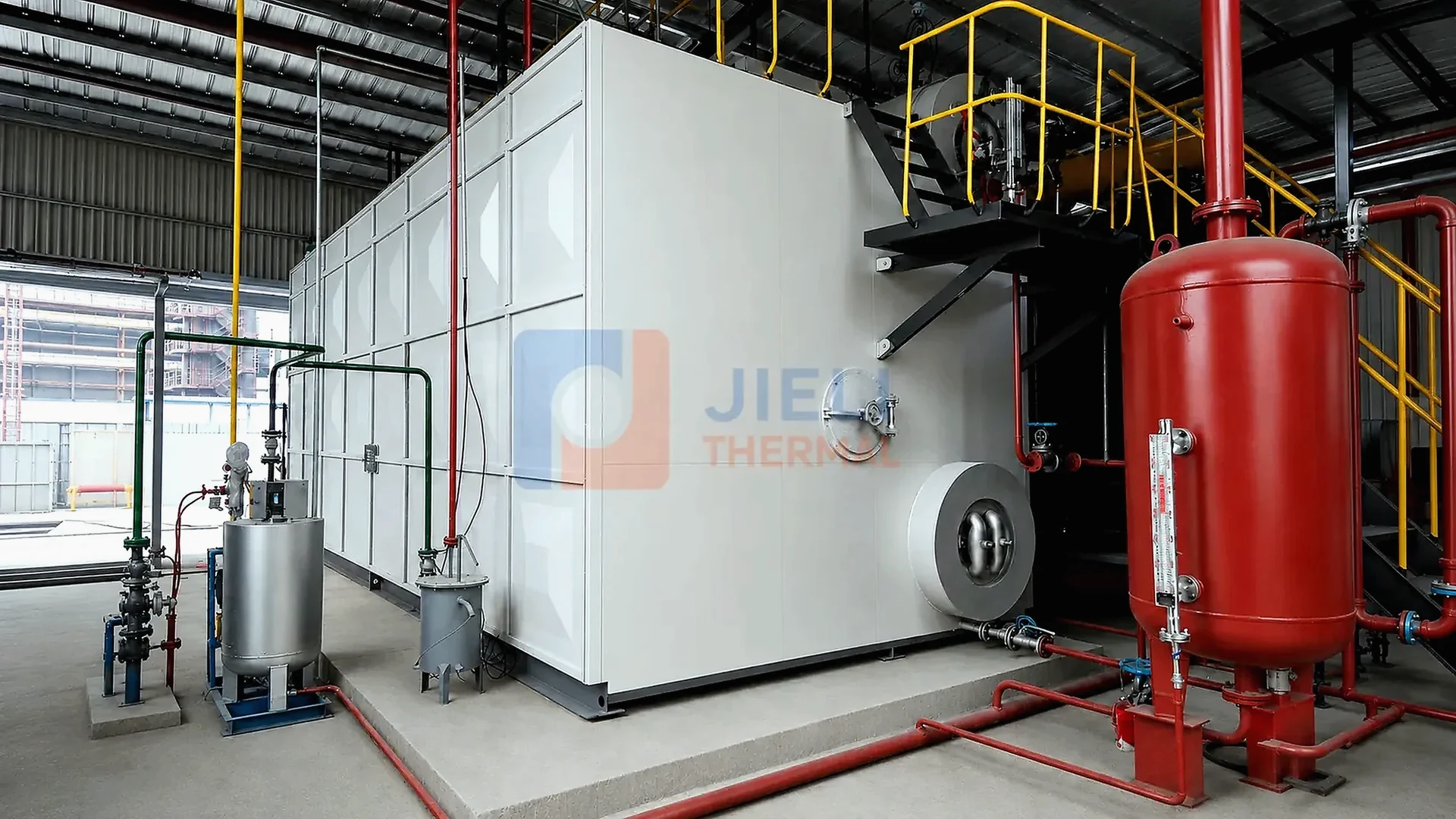
WNS uses fire-tube construction; SZS uses water-tube construction. Compare them at the same duty, pressure, load range and supply scope.
QUICK ANSWER
Choose from the operating envelope, not from one capacity threshold.
WNS fire-tube
Commonly selected for compact packaged steam generation where factory assembly, a simple boiler-house arrangement and shell-boiler water volume suit the duty.
SZS water-tube
Commonly evaluated where capacity, pressure, steam quality, response, modular transport or project layout favors water-tube construction.
Final decision
Normalize code, efficiency basis, burner, economizer, feedwater, controls, emissions and installation scope before comparing price.
Important: model letters are not a substitute for a project data sheet. The final design must follow the destination-country code and the agreed operating conditions.
01 · CONSTRUCTION
Fire-tube and water-tube describe where water and flue gas flow.
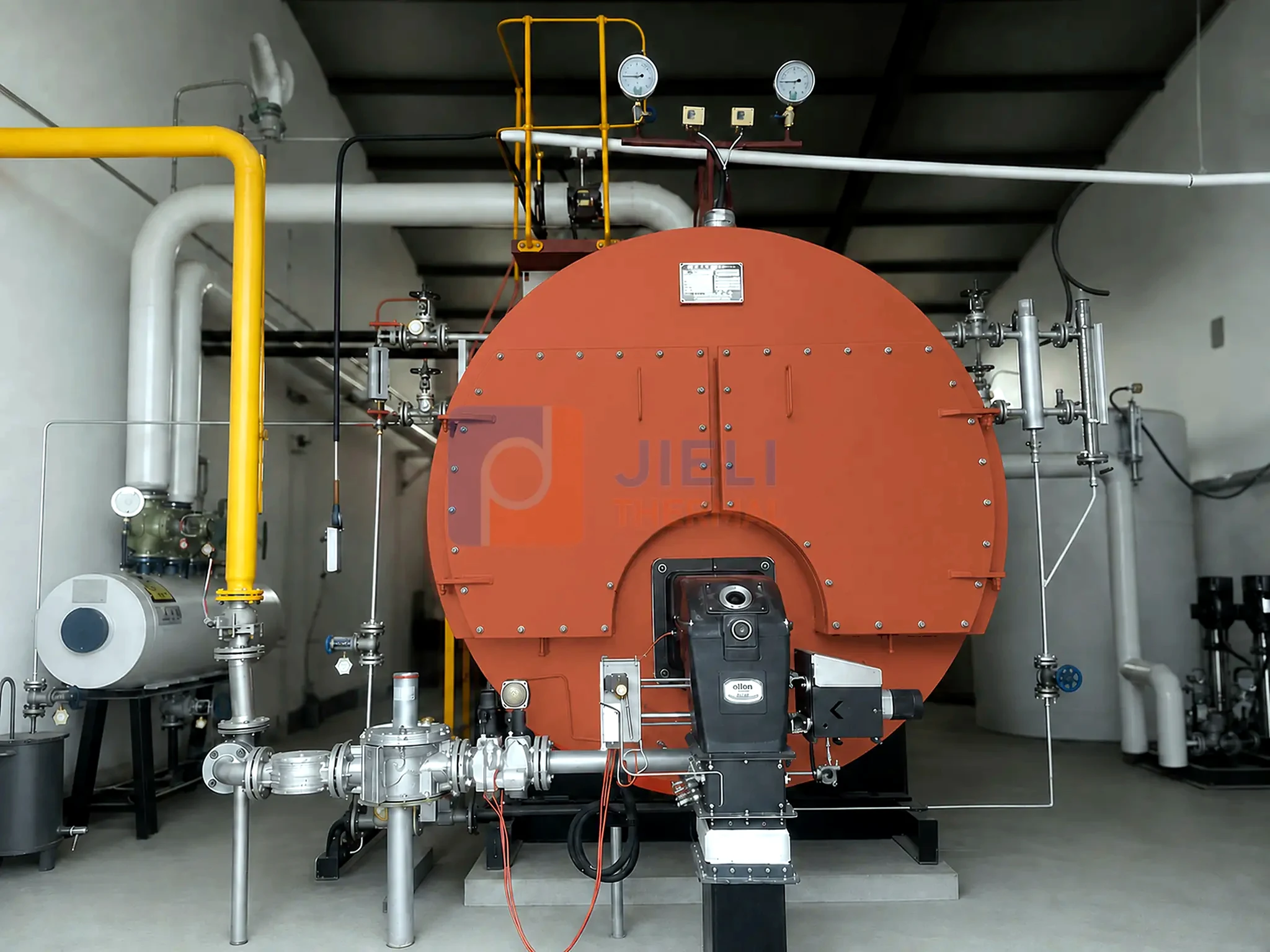
In a WNS fire-tube boiler, combustion gas flows through the furnace and tubes surrounded by water. Many models ship as assembled packages.
In an SZS water-tube boiler, water and steam circulate inside tubes heated externally. Drums, membrane walls and tube banks form the pressure system. Depending on size and transport limits, it can ship as a package or in modules.
02 · COMPARISON
Compare the two types on one written project basis.
| Decision area | WNS fire-tube boiler | SZS water-tube boiler |
|---|---|---|
| Typical project strength | Compact packaged supply and straightforward boiler-house integration | Flexible water-tube arrangement for demanding capacity, pressure or response |
| Water volume | Generally higher, which can buffer short load changes but affects warm-up | Generally lower in the heated circuit, supporting responsive control when correctly engineered |
| Shipment | Often an assembled vessel, subject to transport limits | Packaged or modular, depending on model and transport limits |
| Installation | Packaged supply reduces site pressure-part assembly | Site pressure-part work depends on the supplied package or modules |
| Water quality | Water treatment remains essential | Water chemistry and circulation control can be especially sensitive |
| Maintenance | Access depends on doors, smoke boxes, tube layout and boiler-room clearance | Access depends on drums, headers, tube banks, platforms and module layout |
Require the operating range and installation scope behind each recommendation.
03 · CAPACITY AND PRESSURE
Do not use a universal “above X TPH” switching rule.
There is no universal tonnage cutoff. Check steam condition, load profile, transport, space, code and emissions at the proposed capacity.
Record normal, minimum, startup and peak demand, user pressure and feedwater conditions. Use the 1–20 TPH gas steam boiler guide to prepare the load table.
PROJECT CROSS-CHECK
A documented 12 t/h WNS project shows why tonnage alone is not a switching rule.
JIELI’s published project archive includes an Argentina WNS12-1.25 gas-fired steam boiler rated at 12 t/h, supplied with a DB burner and coordinated gas-train and control scope. This is a real project reference, not a universal recommendation for every 12 t/h duty.
This project shows that WNS can remain relevant at 12 t/h. Another project at the same output may favor SZS because its pressure, load profile or site constraints differ.
04 · LOAD RESPONSE
Evaluate the boiler, burner and steam system together.
Response depends on water volume, heating surface, burner turndown and controls. Large batch peaks may justify an accumulator, multiple boilers or changes to the operating schedule.
Confirm stable minimum firing, cycling at low demand and pressure/feedwater control. For dual fuel, state performance separately for each fuel.
05 · TRANSPORT AND INSTALLATION
A packaged boiler still requires a complete installation plan.
Check shipping dimensions, mass, lifting, access and any field welds for the actual package. Both types need foundations, fuel and water systems, stack, power, controls and commissioning.
06 · WATER AND LIFECYCLE
Water chemistry and maintainability must be designed before purchase.
Specify feedwater and boiler-water limits, sampling, deaeration and blowdown. Check cleaning and inspection access, maintenance clearances and replacement parts.
Efficiency should be compared at the same load, fuel heating-value basis, feedwater temperature, blowdown, ambient condition and heat-recovery scope. Boiler type alone does not establish plant efficiency.
WNS vs SZS RFQ checklist
- Normal, peak, startup and minimum steam flow;
- Steam pressure and condition required at each user;
- Fuel composition, pressure, LHV/HHV and backup-fuel requirement;
- Feedwater analysis, temperature, condensate return and blowdown basis;
- Site altitude, ambient range, emissions limit and applicable code;
- Transport route, maximum module size, lifting and boiler-room access;
- Turndown, redundancy, future expansion and automation philosophy;
- Complete supply boundary, installation responsibility and document list.
RELATED ENGINEERING
Continue from comparison to project data.
FREQUENTLY ASKED QUESTIONS
WNS and SZS boiler FAQ
What is the main difference between a WNS and SZS steam boiler?
A WNS boiler is commonly supplied as a packaged horizontal fire-tube or shell boiler, while an SZS boiler uses a water-tube arrangement with water and steam inside the tubes. The correct choice depends on capacity, pressure, load response, transport, maintenance, emissions and project code.
Is an SZS boiler always more efficient than a WNS boiler?
No. Plant efficiency depends on combustion, excess air, heat-transfer condition, flue-gas temperature, economizer design, blowdown, feedwater temperature and operating load. Boiler type alone does not establish the guaranteed efficiency.
When should a buyer evaluate an SZS water-tube boiler?
Evaluate SZS when capacity, pressure, steam quality, rapid load change, transport envelope, plot arrangement or emissions scope makes a water-tube configuration technically or commercially attractive.
Can WNS and SZS boilers use gas, oil or dual fuel?
Both arrangements can be engineered with suitable gas, liquid-fuel or dual-fuel combustion systems. The burner, fuel train, furnace, fans, controls and emissions equipment must be matched to the actual fuel specification and operating range.
JIELI THERMAL ENGINEERING
Compare WNS and SZS on one project data sheet.
Send the steam profile, pressure, fuel, water analysis, site data, emissions limits and supply boundary. JIELI can review the boiler arrangement and auxiliaries as one industrial steam system.
Request a boiler configuration review