


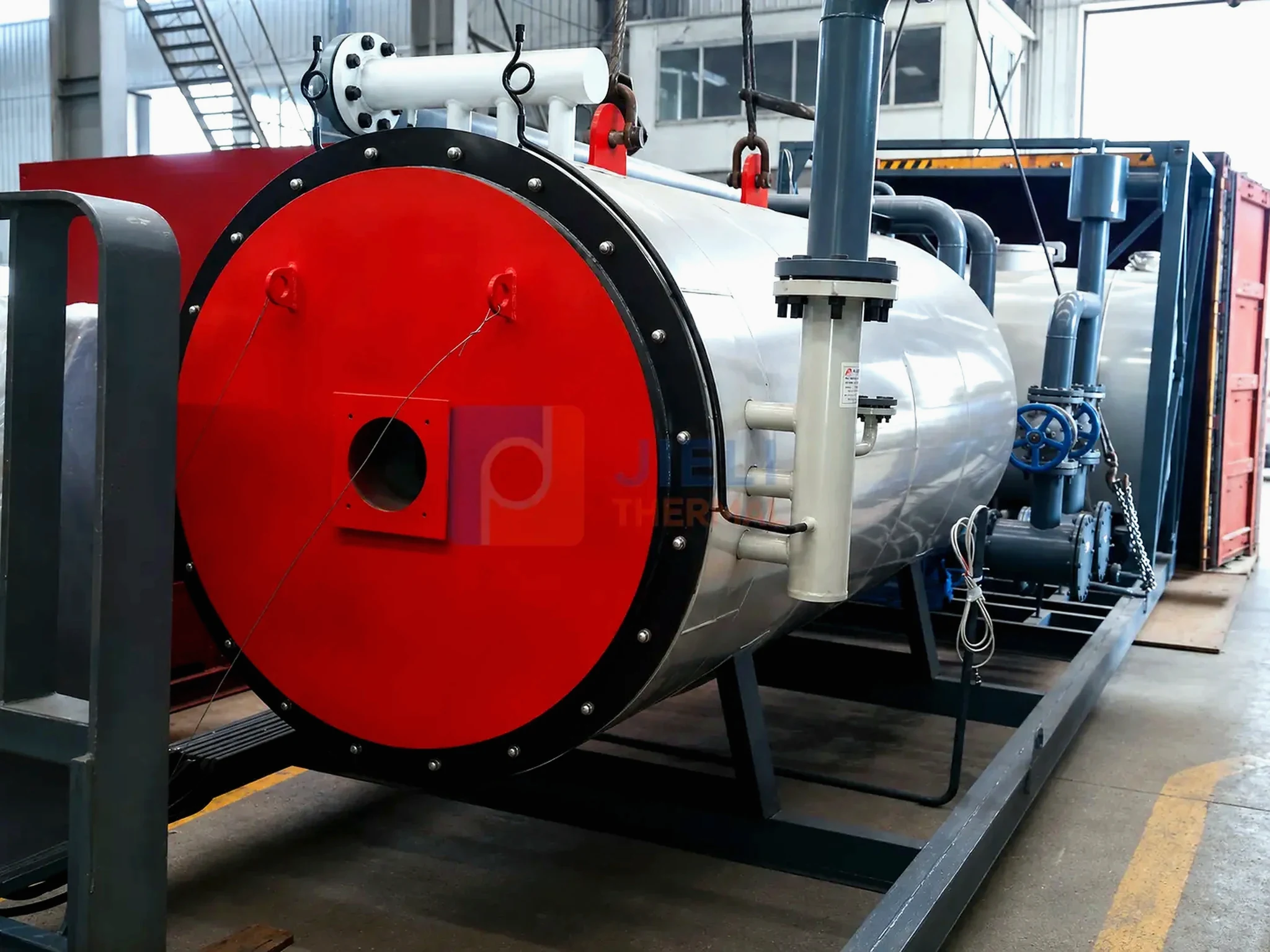
1. Define what the thermal oil system must heat
In an asphalt or bitumen facility, a thermal oil heater commonly serves indirect heat users such as bitumen storage tanks, day tanks, transfer lines, pumps, valves, loading or unloading circuits and project-specific process equipment. The aggregate dryer normally has its own direct-fired combustion duty, so it should not be silently added to—or omitted from—the hot-oil system.
Create a heat-user schedule that identifies every tank and circuit, its operating temperature, heat-up window and simultaneous use. This avoids buying a heater from tank volume alone and exposes whether one circuit, staged heating or duty/standby equipment is required.
2. Separate warm-up load from continuous holding load
Tank heat-up duty depends on bitumen mass, specific heat, starting temperature, target temperature and the allowed heat-up time. Holding duty depends mainly on tank, roof, nozzle and piping heat loss at the design ambient condition. Transfer and unloading loads can create short peaks that do not appear in the normal holding load.
A preliminary sensible-heat relationship is Q = m × Cp × ΔT ÷ time. It is only one part of the calculation: tank steel, insulation losses, pipework, operational margin and the coincidence of users must be reviewed separately. Arbitrary oversizing can increase burner cycling and make low-load control less stable.
3. Confirm temperature, thermal fluid and circulation
Provide the thermal-oil supply and return temperatures needed by the tank coils or external exchangers. The selected fluid’s density, heat capacity, viscosity, maximum bulk temperature and film-temperature limit affect flow, pressure drop and coil design. The thermal-oil flow and pipe-size guide explains the preliminary relationship between duty, temperature difference and circulation.
Pump duty must cover the heater, distribution piping, branches and heat users at operating temperature. Minimum-flow protection, branch balancing and the behavior of control valves matter when tanks enter or leave service. Use the circulation-pump selection guide to prepare the hydraulic inputs.
4. Choose fuel from the real site conditions
A gas- or oil-fired thermal oil heater can offer compact fuel handling and automatic modulation where the required gas pressure or liquid-fuel system is available. A biomass-fired thermal oil heater may be considered where consistent fuel and sufficient space exist, but storage, preparation, feeding, draft, dust collection and ash handling become part of the plant.
Compare delivered fuel energy, fuel variability, turndown, start-stop frequency, emissions, operator workload and backup policy. A low nominal fuel price does not automatically produce the lowest operating cost.
5. Engineer expansion, drainage and safeguards
The expansion system is selected from the total thermal-fluid inventory, cold-fill condition, maximum operating temperature, tank elevation and usable volume. Storage and drain arrangements should support maintenance and controlled fluid handling. Review the expansion-tank sizing method before defining the vessel scope.
Typical protection functions include proven circulation before firing, low-flow trip, high outlet temperature, high differential pressure or other project-defined pressure protection, expansion-tank level monitoring, burner or fuel-system interlocks and emergency shutdown. Final safeguards must follow the selected equipment, fluid, code and local requirements.
6. Use one supply boundary when comparing manufacturers
Ask every thermal oil heater manufacturer to identify the same scope: heater, burner or solid-fuel equipment, circulation pumps, expansion and storage tanks, filters, valves, heat recovery, chimney, controls, instruments, documentation, packing, commissioning support and site interfaces. Heater-only prices cannot be compared directly with complete-system prices.
| RFQ input | Why it matters |
|---|---|
| Bitumen tanks and grades | Defines product mass, temperature range and heat-transfer conditions. |
| Initial / holding temperatures | Separates warm-up duty from steady losses. |
| Heat-up time and operating schedule | Defines peak duty, coincidence and turndown. |
| Piping and heat users | Supports flow, pressure-drop and branch-control review. |
| Fuel, country and site data | Changes combustion, emissions, power and logistics. |
| Required supply boundary | Makes technical and commercial proposals comparable. |
7. Include every asphalt and bitumen heat user in the load schedule
An asphalt plant thermal oil heater may serve more than the main bitumen storage tank. Confirm day tanks, tank coils or external heat exchangers, transfer piping, valve jackets, pumps, unloading or decanting equipment and any trace-heated branches. Record which users operate together so the design reflects the real peak rather than the sum of unrelated nameplate loads.
| Asphalt / bitumen system input | Engineering check |
|---|---|
| Tank count, usable volume and bitumen grade | Establishes the heated mass and relevant material properties for each operating case. |
| Initial and target temperatures | Defines the sensible heat required for warm-up without assuming one temperature for every bitumen grade. |
| Permitted warm-up time | Converts the required energy into a time-based heater duty. |
| Tank, line and valve insulation | Supports a realistic holding-loss and cold-weather review. |
| Simultaneous tanks and transfer operations | Prevents both hidden peak loads and unnecessary oversizing. |
| Thermal-fluid supply / return conditions | Connects heater capacity with circulation flow, pressure drop and film-temperature limits. |
For preliminary equipment selection, compare the project duty with the thermal oil heater range and the gas-fired capacity selection guide. Final sizing must still be checked against the bitumen process, thermal-fluid properties and site conditions.
8. Information for Russian asphalt-plant projects
Russian-language specifications may describe the equipment as a термомасляный котёл or нагреватель термомасла, and the application as нагрев битума, обогрев битумных ёмкостей or a thermal-oil system for an асфальтобетонный завод (АБЗ). These names describe the search and procurement context; they do not replace the engineering inputs required for selection.
For projects serving Russia and Russian-speaking markets, send the bitumen-tank schedule, heat-up time, design ambient temperature, available gas or liquid fuel, electrical standard, emissions requirements and the requested documentation language. See the русское руководство по нагреву битумных ёмкостей, the русский обзор комплексных систем and the газовый / жидкотопливный термомасляный котёл.
Frequently asked questions
Asphalt plant thermal oil heater FAQ
What does a thermal oil heater normally heat in an asphalt plant?
It commonly provides indirect heat for bitumen storage tanks, transfer lines, pumps, valves and other project-defined process users. It does not automatically replace the aggregate dryer burner; the complete plant heat-user list must be confirmed.
How is thermal oil heater capacity estimated for bitumen heating?
Separate tank heat-up duty, steady holding losses, piping and tracing losses, unloading or circulation loads and simultaneous operation. Use project-specific material properties, temperatures, heat-up time and insulation data rather than selecting from tank volume alone.
Can an asphalt thermal oil system use gas, oil or biomass?
Gas, liquid fuel or solid fuel may be considered when the site, fuel properties, emissions limits, operating pattern and equipment space support that choice. Biomass and coal require additional storage, feeding, ash and flue-gas treatment scope.
Which information is required for an asphalt plant thermal oil quotation?
Provide tank sizes and quantities, bitumen grades, initial and holding temperatures, required heat-up time, pipe lengths, heat users, thermal-fluid data, fuel, operating schedule, site conditions, emissions requirements and the required supply boundary.
Can one thermal oil heater serve several bitumen tanks and transfer lines?
Yes, when the design checks simultaneous duty, branch control, hydraulic balancing, minimum heater flow, pump head and the operating sequence for tanks and transfer lines. The heater should not be sized by simply adding every nameplate load if those users do not operate together.