


BOILER OPERATING COST
How to Estimate Natural Gas Consumption for a Thermal Oil Heater or Steam Boiler
Estimate natural-gas consumption from useful heat output, fuel heating value and efficiency. For steam boilers, first calculate the enthalpy rise from feedwater to steam.
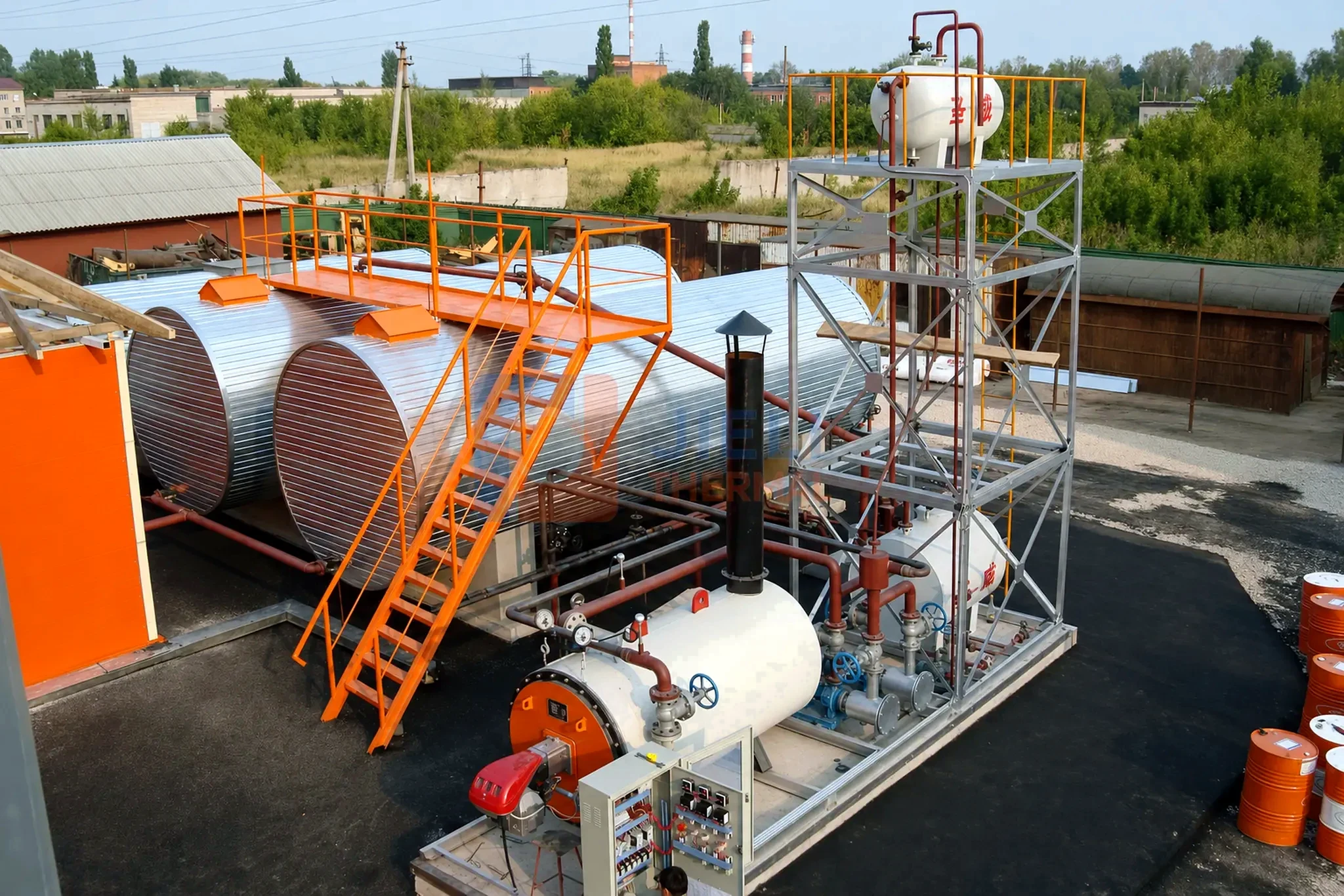
QUICK CALCULATION
Start with useful heat, then divide by efficiency and fuel energy.
Thermal oil heater
Gas flow = useful heat output ÷ (efficiency × gas heating value)
Keep heat output and fuel heating value on the same energy and time basis.
Steam boiler
Gas flow = steam flow × enthalpy rise ÷ (efficiency × gas heating value)
Use the actual steam condition and feedwater enthalpy, not steam tonnage alone.
Do not mix bases: if efficiency is stated on an LHV basis, use LHV gas data. If efficiency is stated on an HHV basis, use HHV gas data.
01 · DEFINE THE BASIS
Five inputs control the estimate.
| Input | Thermal oil heater | Steam boiler | Common error |
|---|---|---|---|
| Useful output | Process heat duty in kW or MW | Steam mass flow and steam condition | Using burner input as useful output |
| Return condition | Thermal-oil inlet and outlet temperatures | Feedwater temperature or enthalpy | Ignoring condensate return |
| Fuel value | Contracted natural-gas LHV or HHV at a stated reference condition | Using a generic value without checking the gas contract | |
| Efficiency | Heater efficiency at the relevant load | Boiler efficiency at the relevant load | Using one peak value for every operating hour |
| Load profile | Rated load, average load, hours, starts, standby and turndown | Multiplying full-load consumption by every operating hour | |
FREE ENGINEERING TOOL
Industrial gas boiler fuel consumption calculator
Estimate full-load and annual natural-gas consumption from useful heat output. Use the same LHV or HHV basis for both efficiency and gas heating value.
Estimated full-load gas flow
117.0 Nm³/hEstimated annual gas use
392,982 Nm³/year Formula: useful heat output ÷ (efficiency × gas heating value). Annual use applies the entered operating hours and average load.Preliminary estimate only. Final consumption depends on actual gas composition, reference volume, steam or thermal-fluid conditions, burner turndown, excess air, stack temperature, heat recovery, blowdown, standby and site operation.
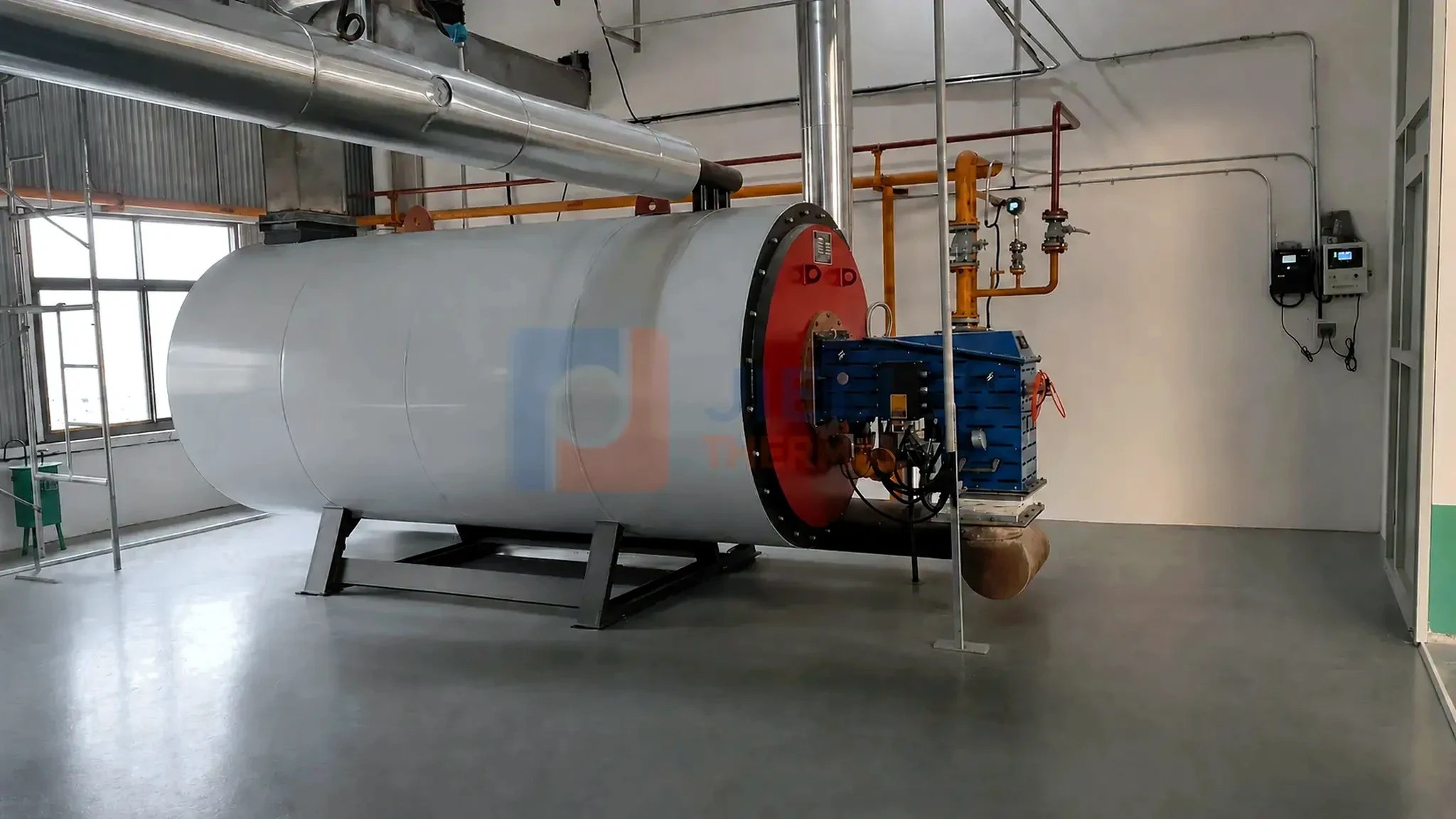
02 · THERMAL OIL HEATER
Calculate from useful process heat duty.
For a gas-fired thermal oil heater, the simplest rated-load estimate is:
V̇gas = Quseful ÷ (η × Hgas)
Where V̇gas is gas flow in Nm³/h, Quseful is useful output in kW, η is efficiency as a decimal, and Hgas is natural-gas heating value in kWh/Nm³ on the same HHV or LHV basis as η.
Worked example: 1 MW useful thermal-oil duty
- Useful output: 1,000 kW;
- Illustrative heater efficiency: 90% LHV;
- Illustrative gas LHV: 9.5 kWh/Nm³.
Gas flow = 1,000 ÷ (0.90 × 9.5) = approximately 117 Nm³/h at full load.
The result applies to the stated full-load assumptions. Gas composition, excess air, stack temperature and operating load change actual consumption.
03 · STEAM BOILER
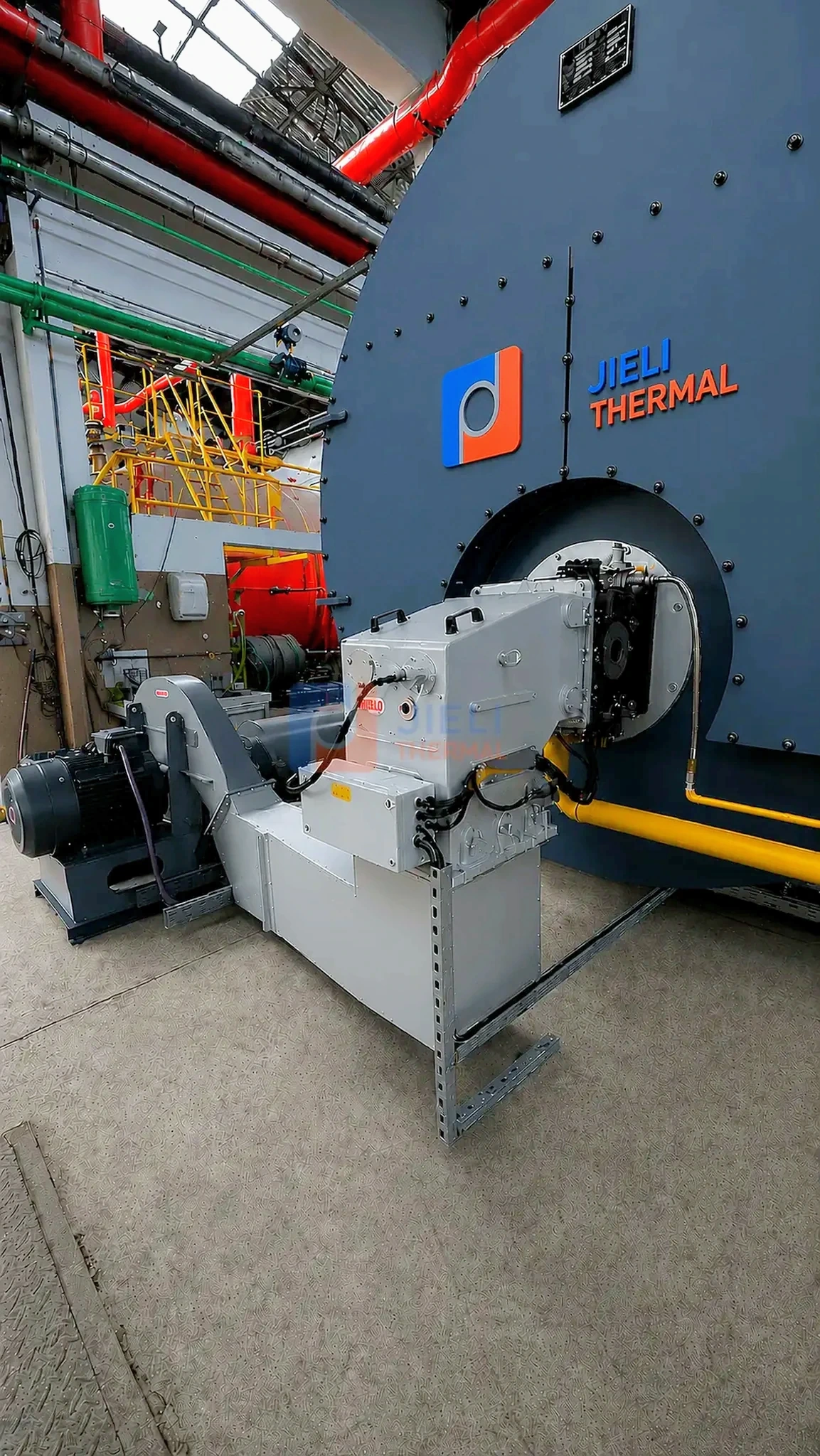
Steam tonnage is not enough: calculate the enthalpy rise.
A gas-fired steam boiler must raise feedwater to the specified steam condition. The useful output is therefore:
Qsteam = ṁsteam × (hsteam − hfeedwater) ÷ 3,600
When mass flow is in kg/h and enthalpy is in kJ/kg, the result is kW. Natural-gas flow then follows from Qsteam ÷ (η × Hgas).
Worked example: 10 t/h steam boiler
- Steam flow: 10,000 kg/h;
- Illustrative enthalpy rise: 2,400 kJ/kg;
- Illustrative boiler efficiency: 90% LHV;
- Illustrative gas LHV: 9.5 kWh/Nm³.
Useful steam output = 10,000 × 2,400 ÷ 3,600 = approximately 6,667 kW. Gas flow = 6,667 ÷ (0.90 × 9.5) = approximately 780 Nm³/h at full load.
Use the specified steam pressure, temperature or dryness fraction and actual feedwater enthalpy. Add blowdown and auxiliary steam loads only where the chosen efficiency boundary excludes them.
04 · FUEL-VALUE BASIS
HHV, LHV and “normal cubic metre” must be stated.
Use the gas supplier’s contracted heating value. Natural-gas composition and heat content vary by source and time.
HHV includes heat recovered by condensing combustion water; LHV excludes it. For the same equipment performance, efficiency expressed on an LHV basis is higher. Use the same basis for efficiency and fuel value.
State the reference temperature, absolute pressure and moisture basis for Nm³ or Sm³. Correct actual meter volume to the same basis before comparison.
05 · REAL OPERATING EFFICIENCY
Nameplate efficiency is not the annual average.
Excess air and stack temperature affect combustion loss. Overall fuel-to-output efficiency also reflects casing and other losses within the test boundary. Check O₂ and CO together when tuning combustion.
| Condition | Why gas use changes | What to verify |
|---|---|---|
| High excess air | More air is heated and exhausted through the stack. | O₂/CO readings and burner tuning across the load range |
| High stack temperature | More sensible heat leaves with the flue gas. | Clean surfaces, heat-recovery duty and minimum safe exit temperature |
| Low-load cycling | Purges and hot standby add fuel without proportional production. | Turndown, minimum stable load and buffer demand |
| Low condensate return | Colder makeup water requires more heat and treatment. | Return percentage, feedwater temperature and deaeration |
| Fouling or scale | Heat-transfer resistance raises stack or tube-wall temperature. | Water treatment, thermal-fluid condition and cleaning records |
06 · OPERATING-COST FORECAST
Build the annual estimate from load bands.
At constant 90% efficiency, 117 × 4,800 × 0.70 ≈ 393,000 Nm³/year. This simplified estimate excludes changes in part-load efficiency and separate startup or standby use.
For budgeting, calculate consumption for each load band using its hours and efficiency. Add startup and standby use once.
- Define production hours.Separate scheduled production, maintenance, seasonal operation and standby.
- Group the load profile.Estimate hours in each duty band rather than one annual average.
- Apply band efficiency.Use burner and boiler performance data at each meaningful load.
- Add auxiliary effects.Include blowdown, makeup water, purge, warm-up and heat-recovery operation.
- Run a sensitivity range.Check high and low gas heating value, production demand and efficiency.
Data JIELI needs for a project fuel estimate
- Required useful heat duty or steam flow;
- Thermal-oil supply/return temperature or steam pressure/temperature;
- Feedwater temperature, condensate return and blowdown rate;
- Natural-gas composition or contracted LHV/HHV and standard-volume basis;
- Daily and annual operating hours, load bands and required turndown;
- Site altitude, ambient conditions and emissions limits;
- Heat-recovery scope, expected stack temperature and efficiency basis.
TECHNICAL REFERENCES
Sources and calculation notes.
- U.S. Energy Information Administration — Natural-gas heat-content conversions and variability
- National Institute of Standards and Technology — Natural Gas Handbook: HHV and LHV definitions
- U.S. Department of Energy — Improve Your Boiler’s Combustion Efficiency
- U.S. Department of Energy / Council of Industrial Boiler Owners — Energy Efficiency Handbook
Worked examples use rounded illustrative inputs. They are not performance guarantees and do not replace a project heat balance, gas analysis, steam-table calculation or applicable acceptance test.
FREQUENTLY ASKED QUESTIONS
Gas boiler fuel-consumption FAQ
How much natural gas does a 1 MW thermal oil heater use?
Using an illustrative LHV of 9.5 kWh/Nm³ and 90% efficiency, a 1 MW useful output requires about 117 Nm³/h at full load. Use the contracted gas analysis and the supplier’s guaranteed efficiency for the project value.
How is gas consumption calculated for a steam boiler?
Multiply steam mass flow by the difference between steam and feedwater enthalpy, divide by 3,600 to obtain kW, then divide by boiler efficiency and natural-gas heating value.
Should boiler gas consumption use HHV or LHV?
Either basis can be used if both the efficiency and gas heating value use the same basis. Mixing an HHV efficiency with an LHV fuel value, or the reverse, makes the result incorrect.
Why does measured gas use differ from the estimate?
Typical reasons include gas composition, meter reference conditions, excess air, stack temperature, fouling, part-load cycling, condensate return, feedwater temperature, blowdown, standby and production variability.
JIELI THERMAL ENGINEERING
Turn process data into a defensible fuel estimate.
For a steam project, compare the gas-fired steam boiler model data with the required steam flow and pressure. For indirect process heating, use the gas-fired thermal oil heater specifications. Send the calculated gas use together with your fuel heating value, efficiency basis, operating hours and project country so we can review the estimate against a proposed configuration.
Send these project details on WhatsApp. Fill in the values you know; this opens an editable draft with the source page, and does not send automatically.
Continue the engineering review with the WNS fire-tube vs SZS water-tube boiler comparison and the industrial steam boiler system piping guide.
Request a project heat balance